When a commercial truck breaks down on the side of a highway, every minute of downtime translates directly into lost revenue, missed delivery windows, and frustrated clients. Fleet managers and owner-operators in Northeast Ohio know this reality better than most. The region’s industrial corridors, dense freight routes, and unpredictable weather create a demanding environment for any commercial vehicle. Having access to reliable heavy duty towing and semi truck repair services around the clock is not a luxury for fleets operating in this region; it is an absolute necessity.
From the outskirts of Cleveland to the smaller townships like Litchfield, OH, commercial drivers need a service provider they can trust at any hour, in any condition. This blog covers what 24/7 commercial roadside assistance looks like in Northeast Ohio, why it matters, and what to expect from a professional heavy truck recovery and repair operation.
The Realities of Commercial Truck Breakdowns in Northeast Ohio
Northeast Ohio sits at a critical intersection of freight movement. Interstate highways, state routes, and local industrial roads carry thousands of semi-trucks each day, moving goods between major distribution hubs and manufacturing facilities. The climate adds another layer of complexity, with harsh winters, heavy rain, and freeze-thaw cycles that wear on both roads and vehicles alike.
Mechanical failures do not follow a schedule. A blown tire, a failed air brake system, an engine that will not turn over, or a transmission issue can strike at two in the morning just as easily as during the midday rush. For drivers hauling time-sensitive cargo, a breakdown near Akron or along a rural stretch outside Litchfield, OH can quickly become a costly crisis without the right support system in place.
The demand for a mobile diesel mechanic who can respond quickly to these situations has grown significantly as fleets expand and driver shortages make every working truck more valuable. A responsive, well-equipped service provider does more than fix the immediate problem; it protects the entire supply chain connected to that single vehicle.
What 24/7 Commercial Roadside Assistance Actually Covers
Many drivers and fleet managers assume that roadside assistance for commercial vehicles is a scaled-up version of standard passenger car service. In practice, it is an entirely different discipline requiring specialized equipment, trained technicians, and a deep understanding of commercial vehicle systems.
A full-service 24/7 commercial roadside assistance operation in Northeast Ohio should be equipped to handle a wide range of situations. Engine diagnostics and repairs are among the most common calls, covering everything from overheating and oil pressure failures to fuel system problems and electrical faults. Tire services for large commercial vehicles require different tools and expertise than standard roadside tire changes, and a proper operation will have the equipment to handle the largest drive and trailer axles.
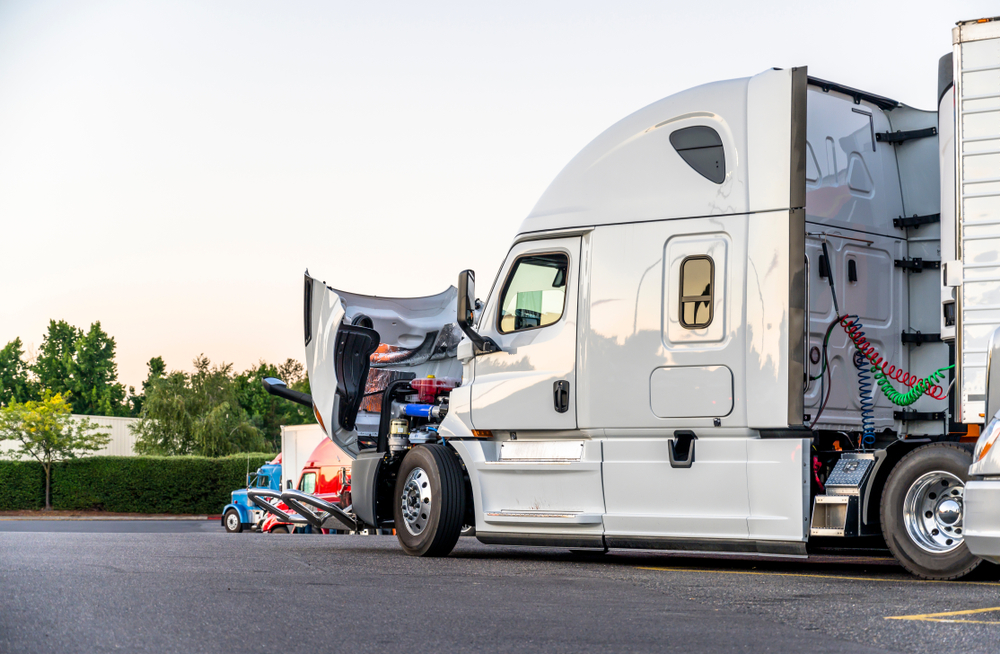
Air brake system repairs, fifth wheel inspections, and suspension work all fall within the scope of what a qualified mobile diesel mechanic should be able to address on-site. Refrigeration unit repairs for reefer trailers are also a critical service for carriers hauling temperature-sensitive freight. When cargo integrity is on the line, getting the right technician to the scene fast is the difference between saving and losing an entire load.
Fluids, filters, belts, and on-road preventive maintenance calls round out the picture. A capable provider serving the Cleveland and Akron corridors will dispatch technicians who arrive with a well-stocked service vehicle, ready to address problems without waiting for parts to be sourced from a distant warehouse.
Heavy Duty Towing and Heavy Truck Recovery: When the Truck Cannot Be Fixed on the Road
Not every breakdown can be resolved at the roadside. Sometimes a vehicle needs to be transported to a full-service facility for more extensive repairs. This is where heavy duty towing becomes a critical component of any fleet’s emergency plan.
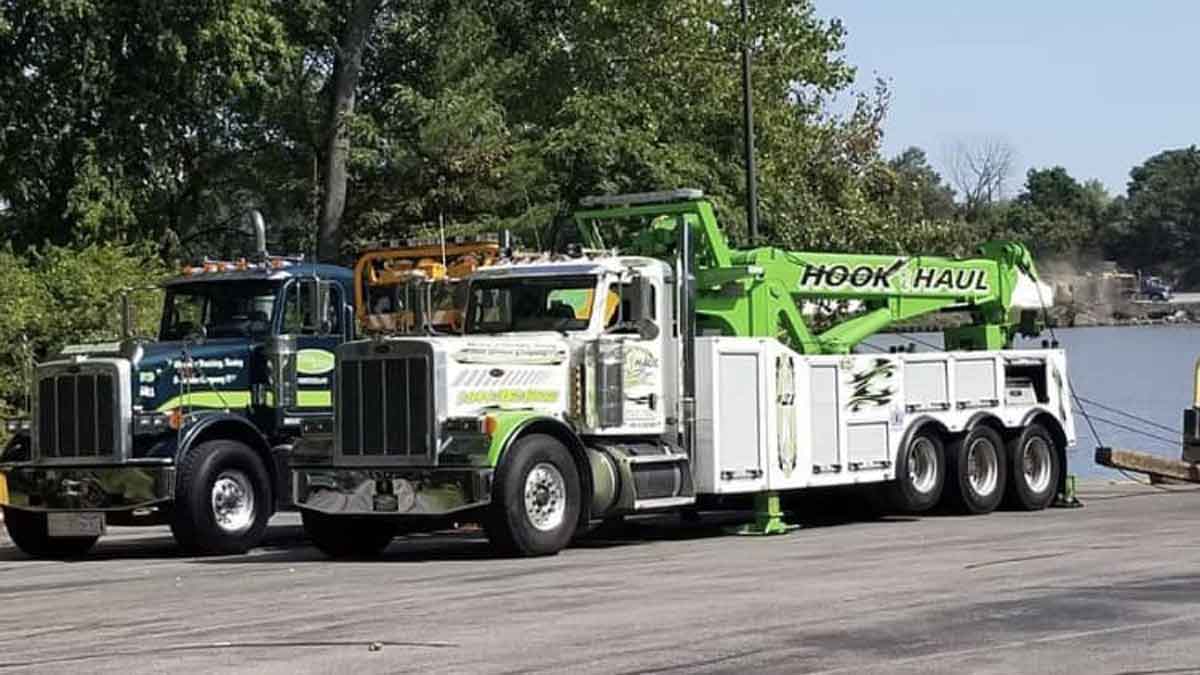
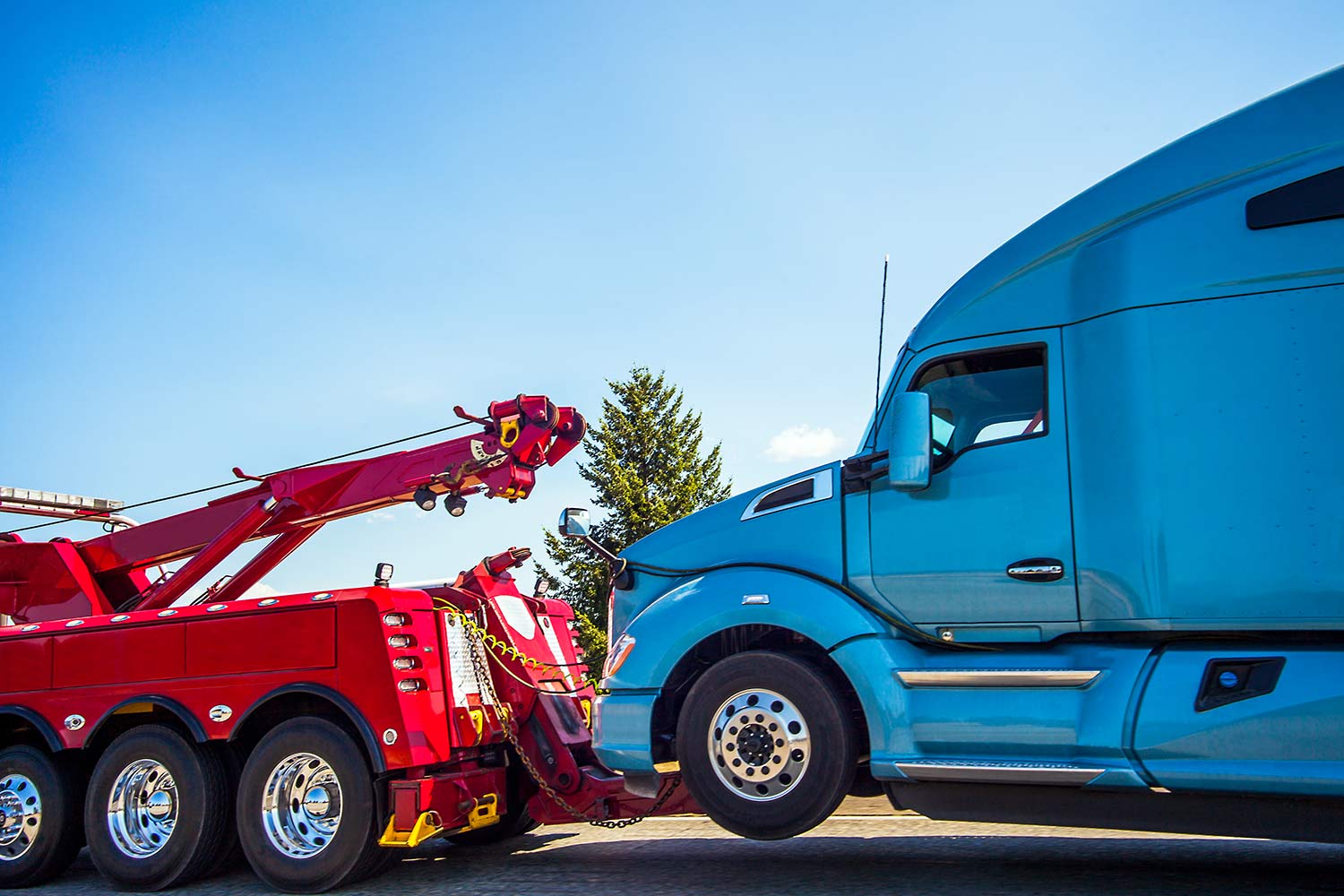
Heavy truck recovery is a specialized field that goes well beyond standard towing. Recovering a loaded semi-truck that has gone off-road, rolled onto its side, or become stuck in a ditch requires large-scale rotator cranes, heavy-duty underlift equipment, and operators with the training to execute recoveries safely without further damaging the vehicle or its cargo.
In Northeast Ohio, the terrain can be unpredictable. Rural roads near Litchfield, OH and surrounding areas can present challenging recovery scenarios, especially during winter months when soft shoulders become treacherous. Urban recovery situations near Cleveland and Akron come with their own complications, including traffic management, confined spaces, and coordination with local authorities.
A professional heavy duty towing company operating in this region needs to maintain equipment capable of handling the full spectrum of commercial vehicles, from straight trucks and single-axle tractors to multi-axle combinations and oversized loads. Response time matters enormously in these situations, and a provider with strategically located equipment and staff can make a measurable difference in how quickly a fleet gets back on the road.
Emergency Cargo Load Shifts: A Specialized Challenge for Northeast Ohio Carriers
One of the more complex and underappreciated aspects of commercial roadside assistance is managing emergency cargo load shifts. When freight shifts inside a trailer due to improper loading, a sudden stop, or an accident, the consequences can be severe. A shifted load can make a trailer unsafe to tow, create weight distribution problems, and in some cases render the cargo unsalvageable without professional intervention.
Emergency cargo load shifts require a different kind of expertise. Technicians need to understand load securement regulations, cargo handling procedures, and the mechanics of safely redistributing or offloading freight in roadside conditions. This is especially important for carriers moving heavy equipment, palletized goods, or irregularly shaped freight through the Northeast Ohio corridor.
Carriers operating between Cleveland, Akron, and points south toward Litchfield, OH should have a clear protocol for what to do when a load shifts in transit. That protocol should include a direct line to a provider capable of dispatching the right equipment and personnel to manage the situation safely and efficiently. Improvised solutions at the roadside create liability and safety risks that no professional carrier can afford.
Working with a provider that has specific experience in emergency cargo load shifts ensures that the situation is handled according to industry best practices, protecting both the driver and the freight. Documentation of the incident, coordination with the carrier’s dispatch, and communication with the receiving party all become part of a well-managed response.
Conclusion
For fleet operators and independent drivers working throughout Northeast Ohio, the combination of heavy duty towing, semi truck repair, and 24/7 commercial roadside assistance is not optional. It is the backbone of operational continuity.
Whether you are managing a regional fleet out of Akron, running long-haul routes through Cleveland, or operating on rural corridors near Litchfield, OH, having a trusted mobile diesel mechanic and heavy truck recovery service on call protects your vehicles, your cargo, and your bottom line. Emergencies do not wait for business hours, and neither should your support network.
Partnering with a provider that understands the specific demands of Northeast Ohio roads, weather, and freight patterns means faster response times, better outcomes, and fewer hours of costly downtime. When the unexpected happens, and in commercial trucking it always does, you need a team that is already ready to move.
Need Heavy Truck Towing and Recovery in Litchfield, OH?
When you need reliable and professional heavy-duty truck towing, repair, or roadside assistance, we’re here to help 24/7 at Hook-N-Haul Recovery Repair Towing & Transport. Whether it’s fast semi-wrecker services, expert diesel truck repairs, or specialized solutions like hydraulic hose repair, welding, or forced regen, our team is equipped to handle it all. From tire replacements to DOT inspections and everything in between, we’re your trusted partner for keeping your heavy-duty equipment and vehicles running smoothly. Call us now and let us show you why we’re the top choice for heavy-duty truck and equipment services!
Few things are more stressful for a truck driver or fleet manager than a breakdown on an Ohio highway. Whether you are hauling freight through a snowstorm or running a tight delivery schedule on a dry summer afternoon, a disabled commercial vehicle can cost your operation thousands of dollars in downtime, missed deliveries, and potential cargo damage. Knowing exactly what steps to take, and who to call, can make the difference between a minor delay and a full-blown logistical nightmare.
This guide walks you through everything you need to know about handling a commercial truck breakdown in Ohio, from the moment your rig goes down to the moment you are back on the road.
Stay Safe and Secure the Scene
The very first thing you need to do when your truck breaks down is prioritize safety. Pull as far off the road as possible, ideally onto a shoulder or an emergency pull-off area. Turn on your hazard lights immediately, and if you are able to do so safely, deploy your reflective triangles at the required distances behind the vehicle. Federal regulations require drivers to place warning devices within ten minutes of stopping on a roadway, so do not delay this step.
Once the scene is secured, stay inside your cab if traffic is heavy. A significant number of roadway fatalities involve drivers who exit their vehicles on busy highways. Notify your dispatcher or fleet manager right away so they can begin coordinating logistics on their end. Document the breakdown with photos if you can, noting the time, location, mile marker, and any visible damage or mechanical issues. This information will be useful for your company, your insurer, and the towing provider who responds to assist you.
If you are carrying hazardous materials, additional protocols apply. Make sure your placards are visible and notify the appropriate authorities as required under federal and state law. A qualified heavy-duty towing provider experienced in hazmat situations will need to respond to your location.
Assess the Situation and Gather Key Information
Before you make a single call, take a few moments to assess what you are dealing with. Is this a blown tire, an engine failure, a brake issue, or something else entirely? Has the truck left the roadway or is it still on a drivable surface? Is the trailer loaded or empty, and if loaded, what is the cargo type and approximate weight?
These details are critical because heavy-duty towing is not a one-size-fits-all service. A standard tow truck cannot handle a fully loaded semi-truck. The equipment required for semi-truck towing is vastly different from what is needed for a passenger vehicle or even a medium-duty work truck. Knowing your vehicle’s gross vehicle weight rating (GVWR), your trailer configuration, and your cargo type will help the towing provider dispatch the right equipment to your location the first time, saving everyone time and money.
Also note your precise location. In rural parts of Ohio, mile markers and GPS coordinates are far more useful than street addresses. If you are near a town or landmark, mention that as well. For drivers operating near Litchfield, OH, and the surrounding Medina County area, local towing companies with knowledge of regional roads and terrain can often respond faster and more effectively than large national dispatch services.
Call the Right Heavy-Duty Towing Provider
This is where your preparation pays off. Every commercial driver and fleet manager should have a vetted heavy-duty towing contact saved before they ever need it. When a breakdown happens, you do not want to be searching online from the side of the road hoping you find someone qualified.
When you call, be ready to provide all of the information you gathered in the previous step. A reputable 24/7 commercial truck roadside assistance provider will ask about your vehicle type, the nature of the breakdown, the load you are carrying, and your exact location. They should be able to give you an estimated arrival time and confirm they have the proper equipment for your situation.
Not all towing companies are equipped for heavy vehicle recovery. Commercial trucks, especially loaded semis, require rotators, heavy-duty wreckers, and operators with specialized training. Attempting to recover a heavy vehicle with inadequate equipment can cause additional damage to the truck, the cargo, and the road surface. It can also create serious safety hazards for other motorists and responders on the scene.
For operators in the northern Ohio region, having access to a local provider near Litchfield, OH means faster response times and familiarity with the roads, weather conditions, and terrain that affect recovery operations in that part of the state. Local providers also tend to have stronger relationships with law enforcement and transportation officials, which can help expedite clearance and minimize your time off the road.
Understand What Happens During Heavy Vehicle Recovery
Once the towing team arrives, they will assess the scene and develop a recovery plan. Depending on the situation, this might involve a simple tow to a nearby repair facility, or it could require a more complex heavy vehicle recovery operation if the truck has gone off the road, jackknifed, or rolled over.
During a recovery operation, the team will work to stabilize the vehicle before any movement occurs. If cargo needs to be offloaded to reduce weight before the truck can be recovered, they will coordinate that process. For semi-truck towing involving a loaded trailer, this might mean bringing in additional equipment or personnel.
You should stay out of the recovery zone for your own safety, but remain available to answer questions and provide access to any vehicle documentation the team may need. Your dispatcher or fleet manager should also stay in contact throughout the process so they can update customers or receiving facilities on delivery timelines.
After the vehicle has been recovered and transported, make sure you receive a full written record of the services performed, the equipment used, and the charges incurred. This documentation will be essential for your insurance claim and for any internal reporting your company requires.
Plan Ahead to Minimize Future Breakdowns
The best breakdown is the one that never happens. Preventive maintenance is the foundation of any reliable commercial trucking operation. Regular inspections, fluid checks, tire rotations, and brake assessments go a long way toward catching problems before they strand your rig on the side of an Ohio highway.
Beyond maintenance, every fleet should have a clear breakdown protocol in place. Drivers should know exactly who to call, what information to provide, and how to secure the scene. Fleet managers should maintain an updated list of vetted service providers for every region their trucks operate in, including reliable 24/7 commercial truck roadside assistance contacts for areas like Litchfield, OH and across northern Ohio.
It is also worth reviewing your roadside assistance coverage and commercial insurance policies annually. Some policies cover towing and recovery costs directly, while others require you to pay out of pocket and file for reimbursement. Knowing the details of your coverage before you need it prevents unpleasant financial surprises at the worst possible moment.
Investing in telematics and GPS tracking systems can also help. When fleet managers can monitor vehicle health and location in real time, they can often identify warning signs before a full breakdown occurs and route drivers to a nearby service facility proactively.
Conclusion
A commercial truck breakdown in Ohio does not have to derail your entire operation. By staying safe, gathering the right information, and calling a qualified heavy-duty towing provider with experience in semi-truck towing and heavy vehicle recovery, you can get back on the road as efficiently as possible. For drivers and fleets operating near Litchfield, OH, having a trusted local contact for 24/7 commercial truck roadside assistance is one of the smartest investments you can make for your business.
Need Heavy Truck Towing and Recovery in Litchfield, OH?
When you need reliable and professional heavy-duty truck towing, repair, or roadside assistance, we’re here to help 24/7 at Hook-N-Haul Recovery Repair Towing & Transport. Whether it’s fast semi-wrecker services, expert diesel truck repairs, or specialized solutions like hydraulic hose repair, welding, or forced regen, our team is equipped to handle it all. From tire replacements to DOT inspections and everything in between, we’re your trusted partner for keeping your heavy-duty equipment and vehicles running smoothly. Call us now and let us show you why we’re the top choice for heavy-duty truck and equipment services!
A semi truck breakdown on the highway can feel like your worst nightmare. You are stuck on the side of the road with thousands of dollars in cargo, miles from your destination, and time running out. The good news is that knowing how to respond quickly and effectively can minimize your downtime and get you back on the road fast. Whether you need heavy duty truck towing, 24/7 truck roadside assistance, or emergency truck repair service, having the right plan in place makes all the difference.
Assess Your Safety First
The moment you realize something is wrong with your semi truck, your first priority must be safety. Pull over to the shoulder as far away from traffic as possible. Turn on your hazard lights immediately so other drivers can see you. If you are on a busy highway, set up your reflective triangles or flares at least 500 feet behind your truck to warn approaching traffic.
Make sure you and any passengers exit the vehicle safely and move away from the highway. Never stand between your truck and oncoming traffic, and avoid leaning against your vehicle. If it is dark outside, wear a reflective vest so drivers can see you. Your safety matters more than anything else, so take these precautions seriously before moving on to any other steps.
Know When to Call for Help
Not every semi truck issue requires professional assistance, but many breakdown situations do. If you notice warning lights on your dashboard, hear unusual noises, experience brake problems, or see fluid leaking beneath your truck, it is time to call for help. Do not attempt to drive a truck with serious mechanical issues, as this could put your safety at risk and damage your vehicle further.
Contact a reliable truck towing service immediately. Look for companies that offer semi truck breakdown help and understand the unique needs of commercial vehicles. The best providers offer 24/7 truck roadside assistance so you can reach them anytime, day or night. When you call, have your location ready, your truck information available, and a clear description of what went wrong. The dispatcher will send a diesel truck roadside repair specialist to your location as quickly as possible.
Document Everything for Insurance
While you wait for help to arrive, use this time productively by documenting the breakdown. Take photos and videos of your truck from multiple angles, any visible damage or fluid leaks, and your surrounding environment. If you have a dash cam, make sure that footage is saved. This documentation is invaluable for insurance claims and potential warranty coverage.
Write down the exact time of the breakdown, your location, road conditions, and any relevant details about what happened. Note the temperature and weather conditions, as these can be important factors. If other vehicles were involved or witnessed the incident, try to get their information. This comprehensive record will help you when filing claims with your insurance company and will make the entire process smoother and faster.
What to Expect from Emergency Truck Repair Service
When your 24/7 truck roadside assistance provider arrives, they will perform a preliminary diagnosis of your semi truck. A qualified technician will inspect your vehicle to determine whether it can be repaired on the spot or needs to be towed to a repair facility. Many common issues, such as battery problems, flat tires, lockouts, and minor adjustments, can be resolved right there on the highway.
If your truck needs more extensive work, the heavy duty truck towing specialist will safely load your vehicle onto their equipment. Professional towing services understand the weight and size of semi trucks and use appropriate rigging and equipment to prevent further damage. They will then transport your truck to a reputable repair facility equipped to handle commercial vehicles. Throughout this process, your chosen truck towing service should keep you informed about timing and next steps.
Getting Back on the Road
Once your semi truck arrives at the repair facility, the technicians will conduct a full diagnostic assessment. Emergency truck repair service providers typically have extensive experience with diesel engines and heavy duty commercial vehicles. They understand the complexity of semi truck systems and can often identify and resolve issues quickly.
The timeframe for repairs depends on what went wrong. Some diesel truck roadside repair issues resolve in hours, while others may take a day or two. Ask your repair facility for a realistic estimate and request regular updates on progress. While waiting, review your options for getting back on the road. Some repair shops offer loaner vehicles or transportation assistance to help you stay mobile during the repair process. Keep your dispatch updated and adjust your delivery schedule accordingly.
Prevention Tips for Future Breakdowns
After your semi truck is repaired and back in operation, take steps to prevent future breakdowns. Maintain a regular preventive maintenance schedule, checking your truck’s fluids, filters, belts, and hoses according to manufacturer recommendations. Keep detailed maintenance records, as these protect your warranty and demonstrate that you are taking proper care of your vehicle.
Before every trip, perform a thorough pre-trip inspection. Check your brakes, tires, lights, and all fluid levels. Listen for unusual sounds and pay attention to how your truck handles. The earlier you catch a potential problem, the better. Additionally, make sure you have your truck towing service contact information saved in your phone and know their coverage areas. Some providers offer membership programs that provide discounted rates and priority service, which can save you money over time.
Conclusion
A semi truck breakdown does not have to derail your entire day. By prioritizing safety, knowing when to call for professional assistance, documenting everything properly, and working with experienced providers of 24/7 truck roadside assistance and emergency truck repair service, you can minimize downtime and get back on the road quickly. Keep a reliable truck towing service contact saved in your phone, perform regular maintenance, and drive defensively to reduce your chances of needing help in the future. When you do need assistance, professional heavy duty truck towing and diesel truck roadside repair specialists are ready to help you get back on track.
Need Heavy Truck Towing and Recovery in Litchfield, OH?
When you need reliable and professional heavy-duty truck towing, repair, or roadside assistance, we’re here to help 24/7 at Hook-N-Haul Recovery Repair Towing & Transport. Whether it’s fast semi-wrecker services, expert diesel truck repairs, or specialized solutions like hydraulic hose repair, welding, or forced regen, our team is equipped to handle it all. From tire replacements to DOT inspections and everything in between, we’re your trusted partner for keeping your heavy-duty equipment and vehicles running smoothly. Call us now and let us show you why we’re the top choice for heavy-duty truck and equipment services!
When your semi breaks down on the highway, everything stops. The schedule you carefully mapped out, the delivery window you committed to, the miles you planned to cover before sunrise, all of it suddenly hinges on one thing: how fast you can get back on the road. For owner-operators, fleet managers, long-haul truck drivers, construction crews hauling equipment, and even RV owners traveling through unfamiliar territory, a breakdown is more than an inconvenience. It is lost time, lost revenue, and added stress.
In those moments, clarity matters. Knowing exactly what to do and who to call can make the difference between a manageable delay and a full-blown logistical nightmare. That is where Hook-N-Haul Recovery Repair Towing & Transport comes in. With 24/7 heavy-duty towing availability, fast response times, experienced diesel mechanics, and comprehensive semi-wrecker services, they are built to handle the toughest roadside situations. If you ever find yourself stuck on the shoulder, here is what to do next.
Step One: Get to Safety and Assess the Situation
The first priority when your truck goes down is safety. Whether it is engine failure, a blown tire, overheating, brake issues, or a sudden loss of power, you need to move the vehicle out of active traffic as safely as possible. Signal early, reduce speed gradually, and guide the truck toward the shoulder or a designated emergency pull-off area.
Once stopped, activate your hazard lights immediately. If conditions allow, set out reflective triangles at appropriate distances behind your vehicle to alert approaching traffic. On high-speed interstates, visibility is critical. Your safety and the safety of other drivers depend on it.
After securing the scene, take a moment to assess what happened. Is it a mechanical issue that might be resolved with emergency roadside diesel repair? Did you experience a tire blowout or axle issue requiring a big rig towing service? Are you hauling heavy equipment that may have shifted or contributed to the breakdown?
Having a basic understanding of the issue helps when you contact a towing and repair provider. The more details you can provide, the faster the right equipment and personnel can be dispatched.
Step Two: Call for 24 Hour Semi Truck Towing or Roadside Assistance
Once you are safe, it is time to make the call. For breakdowns involving semis, heavy equipment, or large RVs, standard towing services are not equipped to handle the job. You need professionals who specialize in heavy duty truck towing and understand the demands of commercial vehicles.
Hook-N-Haul Recovery Repair Towing & Transport offers 24 hour semi truck towing designed specifically for situations like this. Whether it is the middle of the night on a rural highway or rush hour on a busy interstate, their team is ready to respond. Fast response times are not just a convenience. They reduce exposure to roadside hazards and minimize downtime.
When you call, be prepared to share your location, the type of vehicle, the nature of the breakdown, and whether you are loaded. Fleet managers coordinating assistance for drivers can rely on Hook-N-Haul’s dispatch team to handle the situation efficiently, keeping communication clear and direct.
In some cases, heavy duty roadside assistance may be all you need. If the issue can be resolved on-site through emergency roadside diesel repair or a mobile truck repair service, you may avoid a tow altogether. This is especially valuable for owner-operators trying to protect their margins and avoid unnecessary delays.
When Mobile Repair Is the Better Option
Not every breakdown requires a tow to a shop. In many situations, a mobile truck repair service can get you moving again without leaving the shoulder or nearby rest area. This is where experienced diesel mechanics make all the difference.
Hook-N-Haul’s team includes skilled technicians capable of diagnosing and addressing a range of roadside issues. From fuel system problems and electrical faults to brake adjustments and minor mechanical repairs, mobile service can significantly reduce downtime. Emergency roadside diesel repair is often the fastest path back to the road, particularly for long-haul drivers on tight delivery schedules.
Construction and heavy equipment operators also benefit from on-site repair capability. If a piece of equipment experiences mechanical trouble while being transported or operating near a roadway, having access to heavy duty roadside assistance tailored to diesel-powered machinery is critical.
For RV owners traveling through the area, breakdowns can be equally stressful. Hook-N-Haul’s RV repair capability ensures that large motorhomes and diesel pushers receive the specialized attention they require. Instead of scrambling to find a facility that can accommodate your size and mechanical needs, you have one trusted provider equipped to handle both towing and repairs.
When a Semi Wrecker Service Is Required
Some breakdowns go beyond what mobile repair can fix. Severe engine failure, transmission damage, major accidents, or off-road incidents require a semi wrecker service with the proper equipment and expertise.
Heavy duty truck towing involves far more than hooking up a chain and pulling. It requires specialized wreckers designed to handle the weight and dimensions of semis, tractor-trailers, and heavy equipment. Proper rigging, load balance, and secure transport are essential to prevent further damage.
Hook-N-Haul Recovery Repair Towing & Transport operates advanced equipment capable of performing big rig towing service safely and efficiently. Whether your truck is disabled on a busy highway, stuck in a construction zone, or involved in an accident, their team is trained to manage complex recoveries.
Heavy equipment recovery is another area where expertise matters. Bulldozers, excavators, and other machinery require careful handling. Improper recovery can cause structural damage or create additional safety risks. With the right tools and experienced operators, even challenging recovery situations can be managed professionally.
For fleet managers, knowing that a trusted semi wrecker service is available 24/7 provides peace of mind. Downtime costs money. Partnering with a provider that responds quickly and handles equipment with care helps protect both assets and reputation.
Getting Back on the Road and Staying Compliant
Once your truck is towed or repaired, the focus shifts to getting back on the road safely and legally. Depending on the nature of the breakdown, you may need follow-up repairs, part replacements, or inspections before resuming operations.
Hook-N-Haul’s experienced diesel mechanics can assist with more extensive repairs if needed. Beyond immediate roadside fixes, their capabilities extend to ensuring vehicles meet safety and performance standards. DOT inspections are a crucial component of staying compliant and avoiding future issues. If a breakdown revealed underlying problems, addressing them proactively helps prevent repeat incidents.
For owner-operators, a reliable partner for both heavy duty truck towing and follow-up service simplifies logistics. Instead of coordinating between multiple providers, you have a single team capable of handling towing, repair, and inspection needs.
Fleet managers benefit from streamlined communication and consistent service standards. Construction operators and RV owners gain confidence knowing that both towing and mechanical expertise are available under one roof.
Breakdowns are never convenient. They test patience, schedules, and budgets. However, with a clear action plan and the right support, they do not have to derail your operation. Prioritize safety, contact a trusted provider offering 24 hour semi truck towing and heavy duty roadside assistance, and rely on experienced professionals to guide the recovery process.
Hook-N-Haul Recovery Repair Towing & Transport stands ready around the clock with fast response times, comprehensive semi-wrecker services, mobile roadside repair, heavy equipment recovery, RV repair capability, and certified diesel expertise. When your semi breaks down on the highway, the right call can turn a crisis into a controlled, efficient recovery that gets you back where you belong, on the road.
Towing a trailer can be a rewarding and practical experience, whether you’re embarking on a camping trip, transporting goods, or moving heavy equipment. However, the safety and efficiency of towing are heavily reliant on the proper distribution of weight within the trailer. One of the most common and dangerous challenges associated with improper weight distribution is trailer wobble, often referred to as trailer sway. Understanding the causes, consequences, and preventive measures for trailer wobble can save lives and protect valuable equipment.
What Is Trailer Wobble?
Trailer wobble occurs when a trailer begins to oscillate or sway from side to side while being towed. This swaying motion can range from mild vibrations to severe oscillations that make it nearly impossible to maintain control of the towing vehicle. Trailer wobble is not only unnerving but also extremely hazardous, as it can lead to accidents, vehicle damage, and even fatalities.
Common Causes of Trailer Wobble
Several factors contribute to trailer wobble, including:
Improper Weight Distribution: Uneven weight placement can shift the trailer’s center of gravity, making it unstable.
Excessive Speed: Driving too fast, especially around curves or during strong winds, amplifies the risk of wobble.
Poorly Maintained Equipment: Worn tires, inadequate suspension, or loose connections between the trailer and tow vehicle can exacerbate swaying.
Environmental Conditions: Wind, rain, and uneven road surfaces can disrupt a trailer’s stability.
Understanding these causes underscores the critical role weight distribution plays in preventing wobble.
The Physics of Weight Distribution
Proper weight distribution affects a trailer’s center of gravity and balance. A well-distributed load ensures that the trailer’s weight is evenly spread across its axles, minimizing undue stress on any single point.
The Role of Tongue Weight
Tongue weight is the downward force exerted on the hitch by the trailer. Ideally, tongue weight should be 10-15% of the trailer’s total weight. Too little tongue weight can cause the trailer to fishtail, while too much can lift the front wheels of the towing vehicle, reducing steering control.
Balance Between Axles
The placement of heavy items within the trailer significantly impacts its stability. Concentrating weight closer to the axles lowers the risk of sway by maintaining a central center of gravity. On the other hand, placing heavy items too far forward or backward can destabilize the trailer.
Consequences of Improper Weight Distribution
Neglecting proper weight distribution leads to several dangers:
Loss of Control: Severe wobble can cause the driver to lose control of both the trailer and towing vehicle.
Increased Wear and Tear: Uneven weight distribution stresses the trailer’s axles, tires, and suspension, leading to premature wear.
Higher Accident Risk: A swaying trailer is more likely to jackknife or overturn, endangering everyone on the road.
Preventing trailer wobble begins with following best practices for weight distribution. Adhering to these principles ensures a safer and more enjoyable towing experience.
Plan Your Load
Before loading your trailer, take time to plan where each item will go. Heavier items should be placed low and near the trailer’s center, while lighter items can be stored higher and further from the center.
Check the Tongue Weight
Use a tongue weight scale to measure the downward force on your hitch. Adjust the load as necessary to ensure the tongue weight falls within the recommended 10-15% range.
Secure the Load
Properly securing your load prevents shifting during transit, which can disrupt the trailer’s balance. Use straps, bungee cords, or nets to keep items in place.
Maintain the Trailer
Regular maintenance of your trailer’s tires, axles, and suspension is crucial. Ensure that tires are properly inflated and that the suspension system can handle the load.
Use Weight Distribution Hitches
Weight distribution hitches help evenly distribute the weight across all axles, improving control and stability. These hitches are particularly useful for heavier trailers.
Addressing External Factors
While proper weight distribution is essential, it’s not the only factor influencing trailer stability. Addressing external factors can further reduce the risk of wobble.
Adjusting for Wind and Weather
Driving in windy or rainy conditions requires extra caution. Reduce your speed and avoid sudden steering movements to maintain stability.
Choosing the Right Speed
Towing at high speeds increases the likelihood of trailer sway. Stick to recommended speed limits and avoid sharp turns or abrupt braking.
Monitoring Road Conditions
Uneven or poorly maintained roads can amplify wobble. Plan your route to avoid such conditions whenever possible, and adjust your driving to accommodate them.
Signs of Trailer Wobble and How to Respond
Even with proper precautions, trailer wobble can sometimes occur. Recognizing the early signs and knowing how to respond can prevent accidents.
Early Warning Signs
Swaying motion that begins to escalate
Vibrations felt through the steering wheel
Difficulty maintaining a straight path
Steps to Regain Control
Gradually Reduce Speed: Ease off the accelerator and avoid using the brakes unless absolutely necessary.
Maintain a Firm Grip: Keep both hands on the steering wheel to maintain control.
Avoid Sudden Movements: Do not make abrupt steering or braking actions, as these can worsen the wobble.
Pull Over Safely: If the wobble persists, find a safe spot to stop and inspect your load and equipment.
The Role of Technology in Preventing Trailer Wobble
Modern advancements have made towing safer and more efficient. Leveraging these technologies can complement proper weight distribution practices.
Electronic Stability Control (ESC)
ESC systems automatically apply brakes to individual wheels to counteract sway, helping the driver maintain control.
Trailer Sway Control (TSC)
Many towing vehicles are now equipped with TSC, which detects and mitigates trailer wobble by adjusting engine power and applying selective braking.
Advanced Tow Assist Features
Features like rearview cameras, tire pressure monitoring systems, and automated load balancing can significantly enhance towing safety.
The Legal and Ethical Considerations of Safe Towing
Proper weight distribution isn’t just a safety issue; it’s also a legal and ethical responsibility. Overloaded or improperly loaded trailers can result in fines, insurance claims denial, and increased liability in accidents. By adhering to weight distribution best practices, drivers demonstrate a commitment to road safety and the well-being of others.
Conclusion
Proper weight distribution is a cornerstone of safe towing. It minimizes the risk of trailer wobble, enhances control, and ensures a smoother, more efficient towing experience. By understanding the principles of weight distribution, maintaining equipment, and leveraging modern technologies, drivers can prevent accidents and protect their investments. Whether you’re a seasoned hauler or a first-time tower, prioritizing weight distribution is a critical step toward safer journeys.
Need Heavy Truck Towing and Recovery in Litchfield, OH?
When you need reliable and professional heavy-duty truck towing, repair, or roadside assistance, we’re here to help 24/7 at Hook-N-Haul Recovery Repair Towing & Transport. Whether it’s fast semi-wrecker services, expert diesel truck repairs, or specialized solutions like hydraulic hose repair, welding, or forced regen, our team is equipped to handle it all. From tire replacements to DOT inspections and everything in between, we’re your trusted partner for keeping your heavy-duty equipment and vehicles running smoothly. Call us now and let us show you why we’re the top choice for heavy-duty truck and equipment services!