Heavy-duty trucks rely on complex air brake systems to stop safely under massive loads. When a brake failure occurs on the highway, it puts drivers and cargo in severe danger. Identifying a common commercial truck brake problem early keeps your rig compliant with roadside inspection standards.
Here at Hook-N-Haul, we repair commercial brake systems and air lines daily across Northeast Ohio. Knowing how to detect pressure drops, worn brake shoes, and leaking air hoses helps prevent costly roadside breakdowns and out-of-service violations.
Understanding Your Air Brake System Setup
Commercial semi-trucks use compressed air instead of hydraulic fluid to apply stopping force to heavy wheels. Specifically, an engine-driven air compressor pumps atmospheric air directly into primary and secondary storage tanks.
When you press the brake pedal, air flows from the reservoir into the brake chamber. Consequently, this pressure forces a pushrod out, turning the slack adjuster and rotating the S-cam shaft. For more technical background on how the S-cam works, review mechanical engineering standards.
Furthermore, Federal Motor Carrier Safety Administration rules on commercial motor vehicle safety mandate strict daily inspections of these pneumatic lines.
Top 5 Common Commercial Truck Brake Problems
Recognizing failure symptoms before heading out on Interstate 80 or I-77 saves time and money. Below are the most frequent braking issues commercial fleet drivers encounter:
- Pneumatic Air Line Leaks: Cracked rubber hoses, loose glad hand seals, or punctured air lines bleed tank pressure quickly.
- Out-of-Adjustment Slack Adjusters: Automatic slack adjusters fail when internal gears wear down, causing long pushrod stroke distance.
- Worn Brake Friction Material: Contaminated or thin friction linings reduce stopping power and overheat iron brake drums.
- Frozen Air Lines in Winter: Moisture inside un-drained air reservoirs freezes solid during freezing Ohio winters, blocking airflow.
- Faulty Treadle Valve: A sticky foot pedal valve bleeds air pressure continuously whenever you apply brake pressure.
Pro Tip: Drain your wet air tank daily using the manual pull lanyard. Removing water sludge prevents internal valve corrosion and stops air lines from freezing solid during sub-zero temperatures.
Symptoms vs. Causes: Commercial Brake Diagnosis
Pinpointing the exact cause of a stopping problem requires comparing physical symptoms with mechanical components.
| Symptom | Probable Cause | Immediate Action Required |
| Hissing Sound Near Axle | Damaged air hose or torn chamber diaphragm | Perform air leak diagnostics and replace hose |
| Low Pressure Warning Light | Failed air compressor governor or tank leak | Pull over safely; do not drive with low pressure |
| Vehicle Pulls to One Side | Contaminated lining or misadjusted slack adjuster | Inspect brake drum and adjust pushrod stroke |
| Spongy Brake Pedal Response | Excessive pushrod travel or low system air volume | Measure pushrod stroke and inspect lines |
If your low-pressure buzzer sounds while driving, pull off the highway immediately. Continuing to operate with falling air pressure causes the spring emergency brakes to lock up without warning.
Step-by-Step Guide: Performing Air Leak Diagnostics
Locating pneumatic leaks quickly prevents unnecessary downtime during haul routes. Technicians use this systematic testing process for accurate air leak diagnostics:
Step 1: Chock Wheels and Build Full Tank Pressure
Park the truck on level ground and block the tires securely. Next, start the engine and idle until air pressure reaches 120 to 135 PSI.
Step 2: Perform the Static Pressure Drop Test
Turn off the engine while keeping the ignition switch in the ON position. Release the parking brakes and monitor the primary and secondary pressure gauges for one full minute.
- Acceptable Drop: Less than 2 PSI per minute for straight trucks, or 3 PSI for combination tractor-trailers.
- Excessive Drop: Any pressure drop exceeding these limits indicates an active system air leak.
Step 3: Conduct the Applied Brake Pressure Test
Press and hold the foot brake pedal firmly down for one minute. Check the dashboard pressure gauges closely during this test.
- Acceptable Drop: Pressure should not drop more than 3 PSI per minute for single vehicles or 4 PSI for combinations.
- Action: If pressure falls faster, an air line or brake chamber is leaking under pressure.
Step 4: Soap Solution Isolation Test
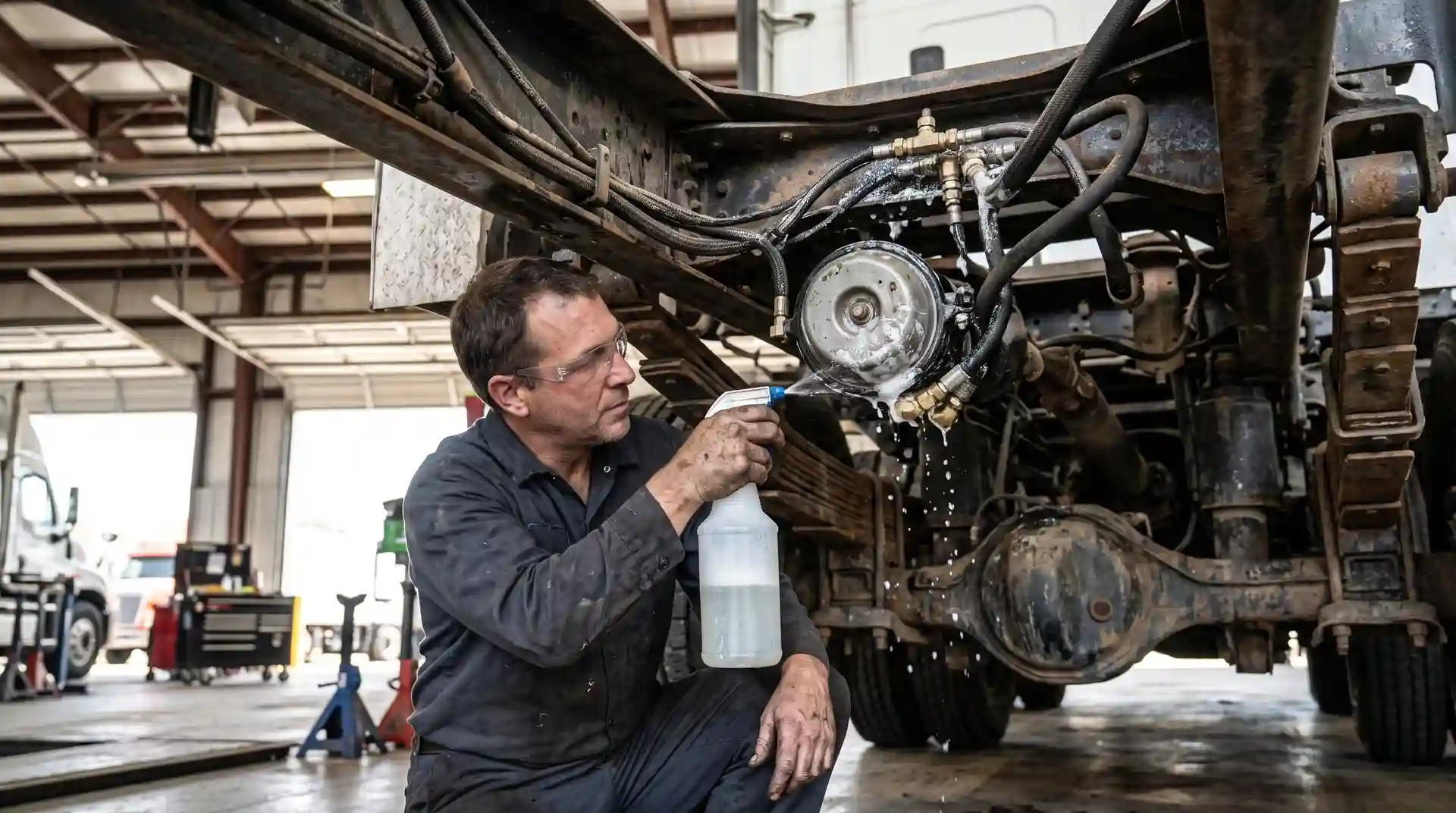
Spray a mix of soapy water over glad hands, air tank fittings, relay valves, and brake chambers. As a result, active leaks will instantly produce expanding soap bubbles.
Pro Tip: Never attempt to weld or patch a leaking brake chamber. The powerful internal spring operates under extreme compression and can cause severe injury if tampered with.
Common Commercial Truck Brake Maintenance: Prevent Out-of-Service Inspections
Regular maintenance ensures your commercial fleet passes state highway patrol inspections with ease. In addition, addressing minor wear early extends component lifespan and protects your bottom line.
Inspecting Pushrod Travel Distance
Measure pushrod stroke length during routine service stops. If pushrod travel exceeds two inches on standard Type 30 brake chambers, adjust or replace the automatic slack adjuster immediately.
Checking Lining Thickness and Drums
Verify that brake shoe linings measure at least 1/4-inch thick at the thinnest point. Furthermore, check drum inner walls for deep heat cracks or scoring.
If your fleet requires professional maintenance, explore our comprehensive heavy-duty truck repair services to keep your vehicles fully operational.
Common Pitfalls to Avoid During Brake Repairs
Avoiding standard repair errors saves thousands in unnecessary mechanical expenses over time:
- Neglecting Glad Hand Seals: Reusing hardened or split rubber seals causes steady air pressure loss at the trailer connection.
- Mixing Brake Shoe Compounds: Installing different friction materials on the same axle creates uneven braking torque.
- Over-Torquing Fitting Connections: Overtightening brass air line fittings strips threads and cracks valve bodies.
- Ignoring Air Dryer Cartridge Changes: Failing to change air dryer desiccant annually allows oil mist to ruin internal rubber seals.
Frequently Asked Questions
What causes a sudden drop in commercial air brake pressure?
A sudden loss of pressure usually stems from a blown air line hose, a ruptured brake chamber diaphragm, or a failed air compressor governor.
How often should commercial air brake tanks be drained?
You should drain moisture from wet air tanks daily. Regular draining prevents water buildup, rust formation, and winter freeze-ups inside control valves.
What is the maximum acceptable air leak rate during inspection?
For combination vehicles, the static leakage rate must stay under 3 PSI per minute. When brakes are fully applied, leakage must remain under 4 PSI per minute.
Can automatic slack adjusters be adjusted manually?
Automatic slack adjusters can be manually adjusted during installation or emergency service. However, if an automatic adjuster consistently loses adjustment, replace the faulty unit immediately.
Reliable Fleet Brake Service in Northeast Ohio
Addressing a common commercial truck brake issue immediately keeps your drivers safe and your shipments on schedule. From rapid air leak diagnostics to full brake shoe replacements, proactive service eliminates highway breakdown risks.
When your rig experiences braking issues or air loss across Cleveland or Akron, count on Hook-N-Haul for expert service. Contact our certified team today for rapid mobile truck roadside assistance and professional fleet maintenance.