It is 4:45 a.m. on I-71 outside Columbus. Your load is due in Cleveland by noon. Then you feel it: a shudder in the steering wheel, a warning light on the dash, and a smell you do not like. Within minutes, you are on the shoulder with your hazards on, a trailer full of freight, and a clock that will not stop ticking.
If you drive or manage a commercial truck, you know this feeling. A small problem you ignored last week is now a tow bill, a missed delivery, and a repair invoice with a lot of zeros.
Here is the good news. Most common commercial truck problems give warning signs long before they leave you stranded. If you know what to look for, you can fix small issues early and avoid the big, painful repair bills.
In this guide, we break down 10 problems that cost fleets and owner-operators the most money across the USA, from Ohio winters to Texas heat. For each one, you will see the causes, the warning signs, the risks of waiting, and the fix. And if you are stuck on the road right now, call Hook-N-Haul at (844) 352-6632 for fast towing and recovery.
Why Small Truck Problems Turn Into Big Repair Bills
A commercial truck is not like a family car. It hauls up to 80,000 pounds, runs for hundreds of thousands of miles, and works in all kinds of weather. Every part is under constant stress.
When one part starts to fail, it often hurts the parts around it. A leaking coolant hose can lead to a cooked engine. A worn brake pad can ruin a rotor and a drum. A clogged filter can starve a fuel pump.
That is why smart drivers follow one simple rule: fix it small, or pay for it big.
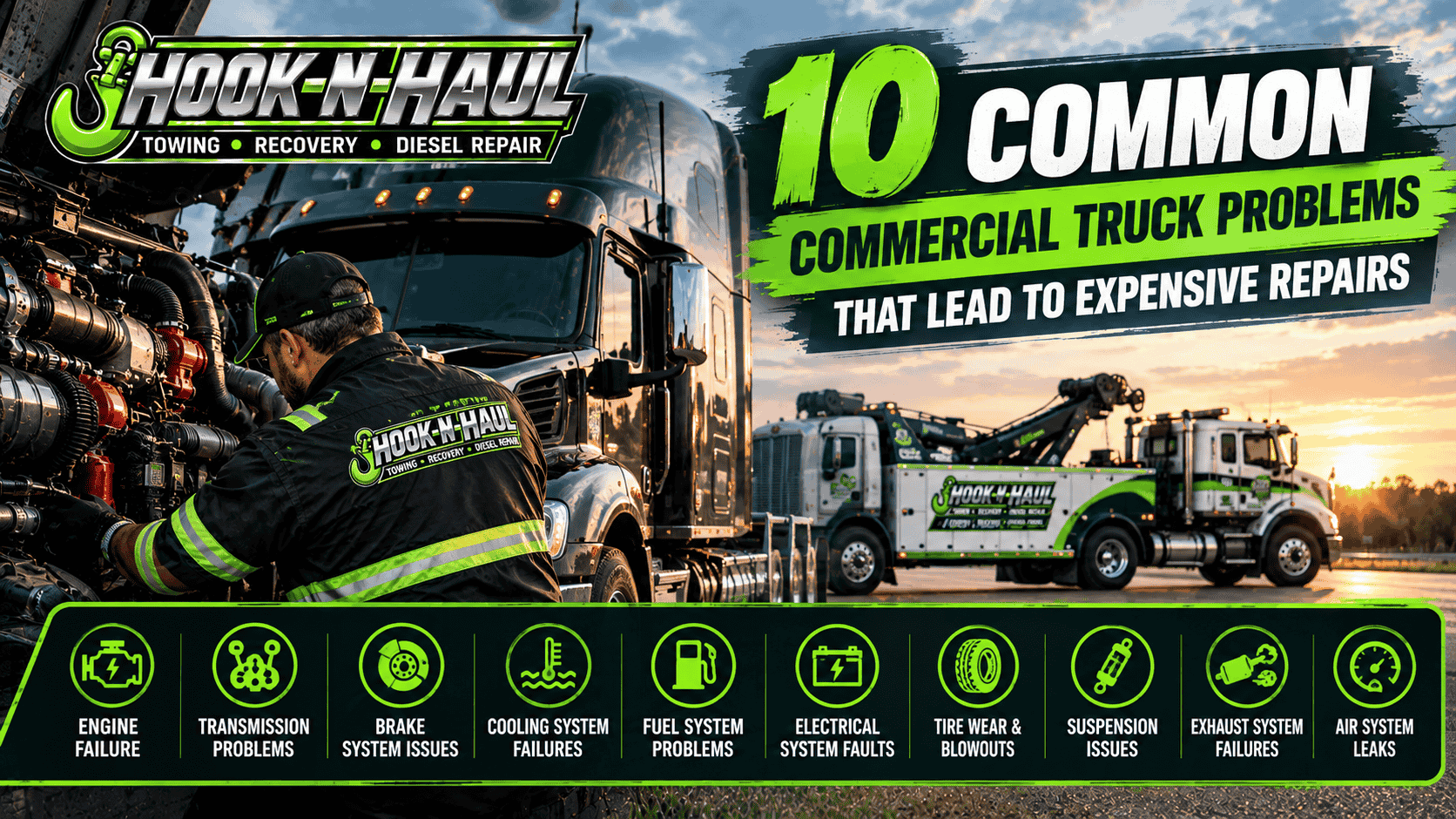
Below are the 10 most common commercial truck problems that lead to expensive repairs, and how to stop each one before it starts.
1. Brake System Wear and Failure
Brakes are the most important safety system on your truck. They are also one of the most common reasons trucks get pulled out of service during roadside inspections.
Causes
- Worn brake pads, shoes, drums, or rotors
- Brakes that are out of adjustment
- Contaminated brake parts from oil or grease leaks
- Heavy loads and long downhill drives, like the hills of southeast Ohio or the mountains out West
Warning Signs
- Squealing, grinding, or scraping sounds
- A soft or low brake pedal
- The truck pulls to one side when you brake
- Longer stopping distance than normal
Risks and Cost
Waiting can lead to brake fade, a failed inspection, or a serious crash. A simple brake job can turn into a full brake system rebuild when drums and rotors get ruined.
The Fix
Inspect brakes at every preventive maintenance service. Replace worn parts early, keep the slack adjusters in good shape, and fix any leak that could reach the friction surfaces.
2. Tire Blowouts and Uneven Tire Wear
Tires are one of the biggest ongoing costs for any truck. They are also one of the easiest problems to prevent.
Causes
- Low tire pressure or overinflation
- Bad alignment or worn suspension parts
- Overloaded trailers
- Old tires, deep road damage, and potholes (a real problem during Ohio’s freeze and thaw season)
Warning Signs
- Tread wearing faster on one edge
- Bulges or cracks in the sidewall
- Vibration at highway speed
- A tire that looks lower than the rest
Risks and Cost
A blowout can tear off fender parts, damage air lines, and cause you to lose control. Beyond the tire itself, you may face a tow, downtime, and body or suspension repair.
The Fix
Check tire pressure every day with a gauge, not just by looking. Rotate and align on schedule, and replace tires before the tread gets too low. Do not run mismatched duals.
3. Engine Overheating and Cooling System Failures
Heat is the enemy of every diesel engine. When the cooling system fails, the damage can be sudden and very costly.
Causes
- Low coolant or leaking hoses
- A bad water pump or thermostat
- A clogged radiator or dirty cooling fins
- A failing fan clutch
- Extreme summer heat in states like Texas, Arizona, and Georgia, or heavy loads on long climbs
Warning Signs
- The temperature gauge creeping up
- Sweet-smelling coolant or visible steam
- Coolant puddles under the truck
- Power loss during climbs
Risks and Cost
An overheated engine can crack a head, blow a head gasket, or warp the block. These are some of the most expensive repairs in the trucking world and can take a truck off the road for weeks.
The Fix
Check coolant levels before each trip, inspect hoses and belts, and flush the system on schedule. If your gauge climbs, pull over safely and shut down. Do not try to “make it to the next exit.”
4. Diesel Emissions System Problems (DPF, DEF, and EGR)
Modern diesel trucks use emissions equipment that is smart but sensitive. This is now one of the most talked-about areas among truck owners.
Causes
- A clogged diesel particulate filter (DPF) from too much idling or short trips
- Bad DEF (diesel exhaust fluid) quality or a failing DEF pump or sensor
- A sticky or clogged EGR valve or cooler
- Skipped regeneration cycles
Warning Signs
- Check engine or emissions warning lights
- Reduced power or “derate” mode
- Poor fuel economy
- Frequent forced regens
Risks and Cost
Ignoring emissions codes can force your truck into a power derate, and in some cases a speed limit. Replacing a DPF or SCR part can cost thousands of dollars.
The Fix
Use good-quality DEF, avoid long idle times when you can, and let regeneration cycles finish. Have codes read as soon as a light comes on. Early cleaning is far cheaper than full replacement.
5. Electrical, Battery, and Alternator Trouble
A truck can have a perfect engine and still go nowhere if the electrical system fails.
Causes
- Weak or old batteries
- Corroded terminals (road salt makes this worse in Ohio, Michigan, and Pennsylvania)
- A failing alternator or starter
- Damaged wiring or loose ground connections
- Too many accessories drawing power during idle
Warning Signs
- Slow cranking or clicking when you start
- Dim lights or flickering dash lights
- Battery light on the dash
- Random warning messages
Risks and Cost
A bad connection can cause hard-to-find problems that waste hours of diagnostic time. A dead truck in winter can also mean a very long wait in dangerous cold.
The Fix
Test batteries before winter, clean terminals, and check the alternator output. Inspect wiring for rubbed or melted spots. Replace weak batteries as a set.
6. Transmission and Clutch Problems
Your transmission and clutch carry the full force of your engine and your load. When they fail, the repair is rarely cheap.
Causes
- Low or dirty transmission fluid
- Worn clutch parts or bad adjustment
- Riding the clutch or poor shifting habits
- Overheating from heavy hauls
- Fluid leaks from seals and lines
Warning Signs
- Hard shifting or grinding gears
- Clutch slipping or a high clutch pedal
- Burning smell
- Fluid spots under the truck
Risks and Cost
Small slips and leaks can grow into a full transmission rebuild or replacement. Many owners say this is where a modest repair becomes a major financial hit.
The Fix
Change fluid on schedule, fix leaks quickly, and train drivers on smooth shifting. Have the clutch adjusted and inspected at regular service intervals.
7. Air System Leaks
Your brakes, suspension, and many other parts depend on compressed air. Even a small leak can lead to big trouble.
Causes
- Cracked or rubbed air lines
- Worn fittings and gladhands
- A bad air dryer or one with old cartridges
- Moisture in the system that freezes in cold weather
- A failing air compressor
Warning Signs
- A hissing sound after you shut down
- Air pressure that drops fast or takes too long to build
- Brakes that feel slow to release
- Frozen air lines in winter
Risks and Cost
Low air pressure can lock your brakes or leave you stranded. Moisture that gets into the system can damage valves and chambers, which adds to the bill.
The Fix
Do a daily air leak check, drain air tanks, and replace the air dryer cartridge on schedule. Fix small leaks right away before they become full failures.
8. Fuel System Contamination and Filter Issues
Bad fuel is a quiet killer. It can damage your engine long before you see a big warning sign.
Causes
- Water or dirt in the fuel
- Old, clogged fuel filters
- Algae growth in stored fuel
- Gelled fuel in very cold weather, which is common during Ohio and Midwest winters
- Failing lift pumps or injectors
Warning Signs
- Hard starting or rough idle
- Loss of power under load
- Black or white smoke
- Frequent filter clogging
Risks and Cost
Contaminated fuel can destroy injectors and high-pressure pumps. Those parts are among the most expensive on a modern diesel.
The Fix
Change fuel filters on time, drain the water separator, and buy fuel from busy, trusted stations. In winter, use the right fuel additives and keep tanks as full as you can.
9. Suspension, Steering, and Alignment Issues
The ride may feel “a little off,” but this can be more than a comfort problem.
Causes
- Worn shocks, springs, or air bags
- Loose or damaged tie rods and kingpins
- Bad bushings and bearings
- Rough roads and heavy loads
- Hitting potholes or curbs
Warning Signs
- The truck wanders or pulls
- Extra play in the steering wheel
- Uneven tire wear
- Clunking or banging noises over bumps
Risks and Cost
Worn steering parts are a safety risk. They also chew through tires fast. What starts as a cheap bushing can become an expensive steering or axle repair.
The Fix
Have your suspension and steering checked at every service. Get regular alignments, grease all fittings, and fix play in the steering as soon as you notice it.
10. Trailer Wheel-End, Bearing, and Hub Failures
Many people focus on the tractor, but the trailer causes plenty of breakdowns too.
Causes
- Low or leaking hub oil
- Worn or poorly installed wheel bearings
- Damaged seals
- Overheated hubs from dragging brakes
- Skipped lubrication and inspection
Warning Signs
- Oil leaking around the wheel
- A hot hub after a drive
- Grinding or humming noise from a wheel
- Smoke or a burning smell near the trailer axle
Risks and Cost
A failed wheel bearing can lock a wheel or even cause a wheel to separate from the trailer. That is dangerous, and it can lead to axle damage, cargo loss, and heavy tow and recovery costs.
The Fix
Check hub oil levels, look for leaks during pre-trip inspections, and service wheel ends on schedule. A hot hub or leaking seal is a “fix it now” item.
Quick Prevention Checklist for Truck Owners and Fleets
Want to avoid most of these common commercial truck problems? Start with these habits:
- Do a full pre-trip and post-trip inspection every day
- Follow the maintenance schedule for your make and model
- Keep written service records for every truck
- Never ignore a warning light or a new noise
- Train drivers to report small issues right away
- Prepare for weather: winterize in the North, and protect cooling systems in the South
- Build a relationship with a trusted shop and a reliable recovery partner before you need one
These habits take a little time, but they can save you thousands in avoidable repairs and downtime.
Why Commercial Truck Repair Costs Add Up So Fast
The repair bill is only part of the story. When a truck goes down, you also pay for:
- Towing and recovery: Getting a heavy truck off the road safely takes the right equipment and training.
- Lost revenue: Every day your truck sits is a day it is not earning.
- Late delivery penalties: Missed delivery windows can hurt customer trust.
- Rental or replacement trucks: These costs stack up quickly.
- Safety and compliance risks: Roadside violations and out-of-service orders can affect your record.
This is why quality Commercial Truck Repair and a fast response when something breaks are so important. The sooner you get help, the smaller the damage tends to be.
Mobile Truck & Trailer Repair vs. Shop Repair: Which Is Better?
Both have a place, and the right choice depends on the problem.
Mobile Truck & Trailer Repair is a great fit when:
- You have a flat tire, a dead battery, or a loose air line
- The issue is small and can be fixed on the spot
- You cannot afford the downtime of a tow
- Your truck is parked at a customer yard, a rest stop, or a shoulder
Shop-based Commercial Truck Repair is the better choice when:
- The problem is major, like engine, transmission, or deep emissions issues
- Your truck needs special tools or a lift
- The repair will take several hours or days
- A full inspection is needed
In many cases, the fastest path is a mix of both: get help on the spot if it is safe, and get a tow to a repair facility when it is not. If your truck cannot be fixed safely on the roadside, a professional tow is the smartest move.
What to Do When Your Truck Breaks Down on the Road
If trouble hits, stay calm and follow these steps:
- Get to a safe spot. Move off the road as far as you can and turn on your hazard lights.
- Set out warning triangles. Place them according to your state’s rules and federal safety guidelines.
- Stay out of traffic. If it is safer, wait outside the vehicle and away from the lane.
- Note your location. Use a mile marker, exit number, or GPS pin.
- Call a heavy-duty towing and recovery team. Do not accept help from untrained, unverified drivers.
- Take photos. Photos of the truck and scene help with insurance claims.
Heavy trucks need the right equipment to be towed. The wrong tow can cause even more damage to your drivetrain, frame, or air system.
How Hook-N-Haul Keeps You Moving Across Ohio and the USA
When your truck is down, you do not need a long phone call or a vague promise. You need someone who answers, shows up, and handles your truck with care.
Hook-N-Haul, part of Recovery Repair Towing & Transport, helps truck drivers, owner-operators, and fleets get back on track. Whether you are stuck on the Ohio Turnpike, near a busy exit in Cincinnati, Dayton, Akron, or Toledo, or dealing with a breakdown somewhere else in the country, our team is ready to help.
Here is how we can help:
- Heavy-duty towing for semi trucks, box trucks, and commercial trailers
- Roadside recovery after breakdowns, accidents, and rollovers
- Safe transport to the repair shop of your choice
- Clear communication from the first call to the drop-off
- Support for fleets that need dependable, repeat service
We know that every hour matters. That is why we focus on quick response, careful handling, and honest updates so you always know what is happening with your truck.
Truck down? Do not wait for a small problem to become a big one.
Call Hook-N-Haul now at (844) 352-6632.
Tell us where you are and what happened. We will help you get your truck and your freight moving again.
Frequently Asked Questions About Commercial Truck Problems
What are the most common commercial truck problems?
The most common commercial truck problems include brake wear, tire damage, engine overheating, emissions system trouble, electrical failures, transmission and clutch issues, air system leaks, fuel contamination, suspension and steering wear, and trailer wheel-end failures. Most of these start small and grow when ignored.
What is the most expensive commercial truck repair?
Engine and transmission repairs are usually the most expensive. A cracked cylinder head, a failed turbocharger, or a full transmission rebuild can cost thousands of dollars. Costs vary by truck, parts, and labor rates. Regular maintenance is the best way to avoid them.
How often should a commercial truck be serviced?
It depends on the truck, the engine, and how it is used. Many trucks follow a preventive maintenance schedule based on miles, hours, or time. Check your owner’s manual and your engine maker’s guidelines. Daily pre-trip inspections should happen no matter what.
What does mobile truck and trailer repair include?
Mobile Truck & Trailer Repair usually covers services that can be done at your location, such as tire changes, battery replacement, air line repairs, light and wiring fixes, and minor fluid or filter service. Bigger repairs often need a shop.
Should I keep driving if my check engine light is on?
Not without finding out why. Some lights are minor, but others warn of serious engine or emissions trouble. If the light is flashing, or the truck loses power, pull over safely and call for help. Driving on can turn a small repair into a major one.
How can I lower my commercial truck repair costs?
Stick to a maintenance schedule, inspect your truck every day, fix small problems early, use quality parts and fluids, and train drivers to report issues. Keeping good records also helps you spot patterns before they become costly.
Can a semi truck be towed with the trailer attached?
Often it can, but it depends on the problem and the equipment. A trained heavy-duty towing team will check the situation, protect your drivetrain and air system, and choose the safest method. This is not a job for an unqualified tow operator.
Who do I call for a heavy-duty tow near me?
Call a heavy-duty towing company with trained operators, proper equipment, and a clear process. In Ohio and across the USA, you can call Hook-N-Haul at (844) 352-6632 for help with commercial truck towing and recovery.
Final Thoughts: Protect Your Truck, Your Time, and Your Income
Expensive repairs rarely come out of nowhere. They grow from small problems that were easy to miss or easy to put off.
By knowing the most common commercial truck problems, doing daily checks, and getting help early, you can protect your equipment and your income. And when something does go wrong, having the right tow and recovery partner can make all the difference.
Do not let a bad day turn into a bad month. If your truck is down or you want a reliable team on speed dial, call Hook-N-Haul at (844) 352-6632 today.
Disclaimer: This article is for general information only. Repair needs and costs vary by vehicle, location, and condition. Always follow your manufacturer’s guidelines and consult a qualified technician for diagnosis and repair.