
Your heart is pounding. You just hitched up a trailer for the very first time, and now you’re staring down a busy Ohio highway wondering if you’re about to make a huge mistake. Sound familiar?
You’re not alone. Every year, thousands of first-time trailer owners across Ohio and the rest of the country hook up a trailer with shaky hands, hoping for the best. Some make it home just fine. Others end up on the side of I-70 with a swaying trailer, a popped tire, or worse a call to a towing company after something goes wrong.
Here’s the good news: towing a trailer safely isn’t complicated once you know the basics. This guide breaks it down step by step, in plain English, so you can hit the road with confidence instead of fear. And if anything ever does go sideways, our team at Hook-N-Haul is just one phone call away at (844) 352-6632.
Let’s get you towing safely, the right way, from day one.
Why So Many Beginners Get Trailer Towing Wrong
Towing feels simple on paper: hitch it up, hop in the truck, and drive. But the reality is that a trailer changes everything about how your vehicle handles. Your stopping distance gets longer. Your turns get wider. Your blind spots multiply. And if the load isn’t balanced right, your trailer can start to sway at highway speeds, a terrifying experience for anyone who hasn’t felt it before.
Most beginner towing accidents in Ohio and across the U.S. come down to a handful of avoidable mistakes:
- Hitching up the wrong way, or not fully locking the coupler
- Overloading the trailer or loading it unevenly
- Skipping the safety chains or wiring checks
- Not knowing how to handle sway or brake failure
- Driving highway speeds before they’re ready
The good news? Every single one of these problems has a simple fix. Let’s walk through exactly how to tow a trailer safely for beginners, from the moment you hitch up to the moment you park.
Step 1: Know Your Numbers Before You Ever Hitch Up
Before you tow a trailer safely for beginners’ success, you need to understand a few numbers. This sounds boring, but it’s the single most important step, and it’s the one most new tow drivers skip.
Check Your Tow Vehicle’s Capacity
Every truck, SUV, and even some cars have a maximum towing capacity set by the manufacturer. You can usually find this number in your owner’s manual or on a sticker inside the driver’s door.
Weigh Your Trailer and Cargo
Add up the weight of the trailer itself plus everything loaded inside it. This is called the Gross Trailer Weight (GTW). If your GTW is higher than what your vehicle can safely pull, you’re setting yourself up for trouble, poor braking, engine strain, and transmission damage.
Match Your Hitch Class to the Load
Hitches come in classes (Class I through Class V), each rated for a different weight range. Using a hitch rated too low for your trailer is one of the most common and most dangerous beginner mistakes.
Step 2: Hitch Up the Right Way, Every Time
A poorly hitched trailer is the number one cause of “runaway trailer” incidents. Here’s a simple checklist to follow every single time you hook up:
The Pre-Tow Hitch Checklist
- Back your tow vehicle up so the hitch ball lines up under the trailer coupler.
- Lower the coupler onto the ball and lock it down completely.
- Cross the safety chains under the tongue (this catches the trailer if it ever separates).
- Plug in the wiring harness and test your brake lights, turn signals, and running lights.
- Raise the trailer jack fully and secure it.
- Give the trailer a firm tug by hand to confirm it’s locked in place.
Skipping even one of these steps is how beginners end up with a trailer disconnecting mid-drive, one of the scariest and most preventable towing accidents out there.
Step 3: Load It Right, or Risk a Dangerous Sway
Trailer sway is one of the most frightening experiences a new tow driver can have. Your trailer starts to fishtail behind you, and it feels like you’re losing control of the whole rig.
What Causes Trailer Sway
- Too much weight loaded behind the trailer’s axle
- Uneven side-to-side loading
- Speeds that are too high for road or wind conditions
- Worn or mismatched tires
The Fix: The 60/40 Rule
Load about 60% of your cargo weight toward the front of the trailer (closer to the tow vehicle) and 40% toward the back. This keeps proper “tongue weight” on the hitch, which is usually 10-15% of the total trailer weight. Correct tongue weight is one of the biggest keys to safe, sway-free towing.
If Sway Happens Anyway
Take your foot off the gas gently, never slam the brakes. Let the trailer settle on its own, then pull over when it’s safe to recheck your load and hitch.
Step 4: Drive Like You’re Towing (Because You Are)
Once you’re moving, remember that everything takes longer with a trailer behind you.
Beginner Driving Rules for Towing
- Slow down. Give yourself more room and lower speeds, especially on Ohio’s hilly back roads or highway on-ramps.
- Brake early. Stopping distance can double with a loaded trailer.
- Take wider turns. Your trailer’s wheels will cut inside your vehicle’s turning path.
- Check mirrors constantly. Towing mirrors or extended side mirrors are a must for seeing around a wide trailer.
- Avoid sudden lane changes. Quick, jerky movements are the fastest way to trigger trailer sway.
Step 5: Know the Risks Ohio Drivers Face
Ohio’s mix of interstate highways, rural two-lanes, and unpredictable seasonal weather creates some unique towing challenges:
- Winter ice and snow on I-71, I-75, and I-70 make braking distances even longer.
- Steep grades in southeastern Ohio can overheat brakes on long descents.
- High winds on open stretches near Lake Erie can push a trailer sideways.
- Construction zones, common across Columbus, Cleveland, Cincinnati, and Dayton, demand extra caution with a wide trailer.
No matter where you’re towing in the USA, the same core rule applies: match your speed and following distance to conditions, not just the posted limit.
Common Beginner Mistakes (And How to Avoid Them)
| Mistake | Why It’s Dangerous | The Fix |
| Overloading the trailer | Reduces braking power, strains your engine | Stay under your GTW rating |
| Skipping the safety chains | No backup if the coupler fails | Always cross and connect chains |
| Ignoring tire pressure | Increases blowout risk | Check tires before every trip |
| Not testing brake lights | Other drivers can’t anticipate your stops | Test lights before you leave |
| Towing too fast | Increases sway and stopping distance | Stay 5-10 mph under the limit |
When Something Goes Wrong on the Road
Even careful beginners can run into trouble: a flat tire on the trailer, a hitch that won’t release, a truck that overheats under the load, or a trailer that starts fishtailing on the highway. When that happens, don’t try to “wait it out” on the shoulder of a busy road. That’s when small problems turn into serious accidents.
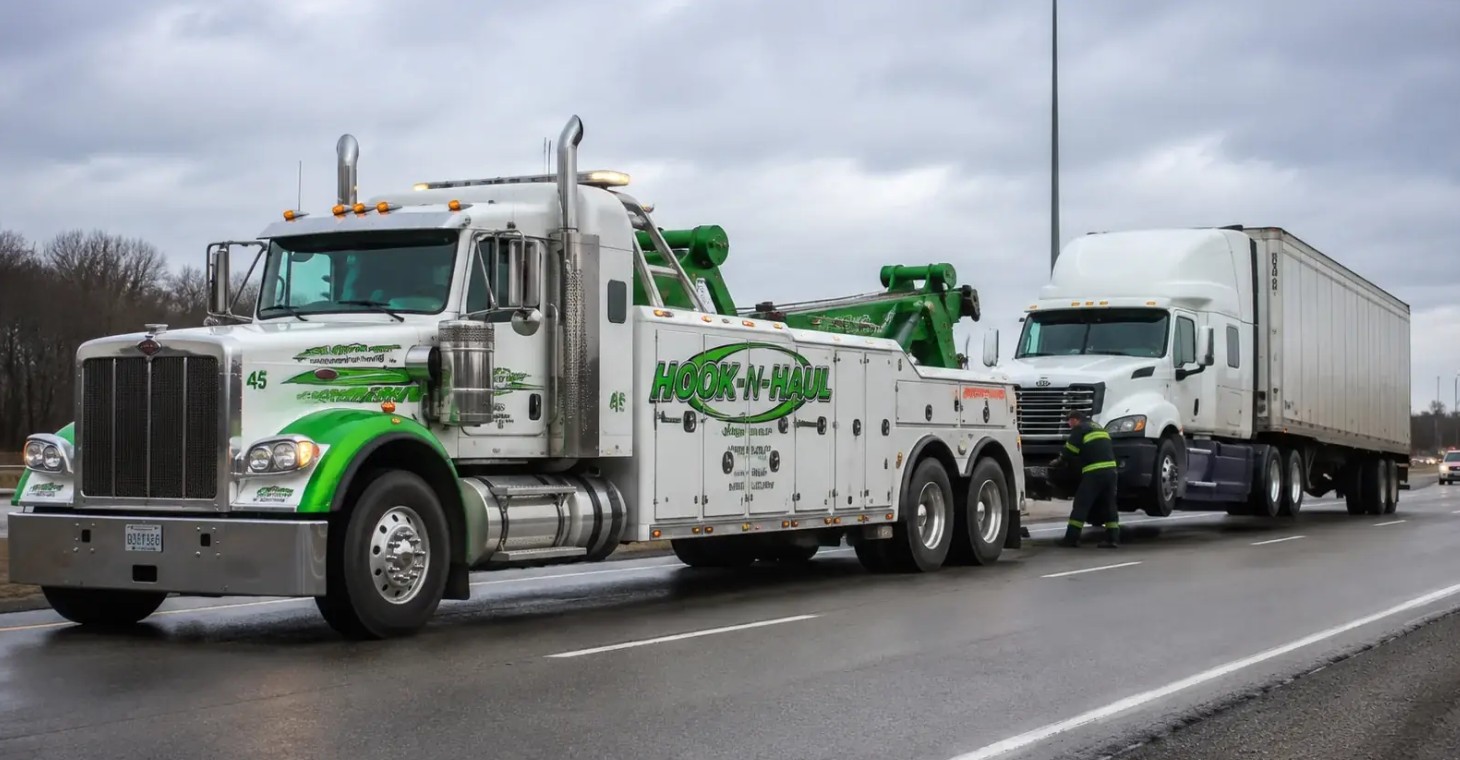
This is exactly where having a trusted towing and recovery partner makes all the difference. At Hook-N-Haul, we specialize in helping drivers across Ohio and the surrounding region get back on the road safely, whether you need a quick roadside fix or a full recovery.
How Hook-N-Haul Keeps Beginner Tow Drivers Safe
We’ve spent years helping first-time trailer owners, weekend haulers, and full-time drivers get out of tough spots. Our services include:
- 24/7 Emergency Towing for trailers, trucks, and passenger vehicles
- Recovery Services for trailers stuck, tipped, or jackknifed
- Transport Services if your trailer or vehicle needs to move to a repair shop or new location
- Mobile Truck & Trailer Repair, so a broken light, bad brake, or hitch issue can often be fixed right where you are, without an expensive tow
If you’re new to towing, keep our number saved before you ever hit the road: (844) 352-6632. Whether it’s a flat tire, a stuck trailer, or a hitch that won’t budge, we’re ready to help around the clock.
Frequently Asked Questions
How do I know if my vehicle can tow a trailer?
Check your owner’s manual or the towing capacity sticker inside your driver’s side door. Compare that number to your trailer’s total loaded weight (Gross Trailer Weight). If the trailer weighs more than your vehicle’s rated capacity, you need a different tow vehicle or a lighter load.
What speed should beginners tow at?
Most experts recommend staying 5-10 mph under the posted speed limit, and no faster than 55-60 mph even on the highway, especially for your first several trips. Slower speeds give you more time to react and reduce the risk of trailer sway.
Why does my trailer sway back and forth?
Trailer sway usually comes from too much weight behind the axle, uneven loading, high winds, or driving too fast for conditions. Following the 60/40 loading rule and keeping proper tongue weight (10-15% of trailer weight) solves most sway issues.
Do I need a special license to tow a trailer in Ohio?
For most personal-use trailers under standard weight limits, a regular driver’s license is enough in Ohio. Larger commercial trailers may require a commercial driver’s license (CDL). When in doubt, check with the Ohio Bureau of Motor Vehicles.
What should I do if my trailer disconnects while driving?
This is why safety chains are required by law. If your trailer disconnects, the crossed chains should catch it and keep it attached to your vehicle. Pull over safely as soon as possible, and call a professional towing service like Hook-N-Haul to inspect the hitch before you drive again.
Can Hook-N-Haul help if I’m stuck on the side of the road with a trailer?
Yes. Hook-N-Haul offers 24/7 towing, recovery, transport, and mobile truck & trailer repair across Ohio and the surrounding region. Call (844) 352-6632 any time you need help getting back on the road.
Final Thoughts: Tow With Confidence, Not Fear
Learning how to tow a trailer safely for beginners doesn’t happen overnight, but it doesn’t have to be scary either. Get your numbers right, hitch up carefully every time, load your trailer properly, and drive with extra caution. Do those four things, and you’ll avoid the vast majority of problems new tow drivers face.
And if something still goes wrong? You don’t have to handle it alone. Hook-N-Haul is here for Ohio drivers and beginners across the country, ready to help with towing, recovery, transport, and mobile truck & trailer repair whenever you need it.
Save this number before your next trip: (844) 352-6632.
Stay safe out there, and happy towing.
