
A flat tire on a loaded commercial truck disrupts your delivery schedule and endangers other motorists. Many drivers assume any nail or screw hole qualifies for a quick roadside plug. However, strict safety rules dictate exactly when a tire can not be patched.
Here at Hook-N-Haul, we inspect commercial truck tires and deliver roadside solutions across Northeast Ohio every day. In this guide, our certified mechanics explain the critical damage limits, tire anatomy rules, and safety standards that require immediate tire replacement instead of a temporary repair.
Direct Answer: When Can a Tire Not Be Patched?
A technician cannot repair a tire if the puncture occurs in the sidewall, shoulder, or outer tread ribs. In addition, you must replace the tire if the puncture hole exceeds 1/4 inch on passenger vehicles or 3/8 inch on commercial truck tires.
Technicians must also condemn any tire displaying run-flat interior heat damage, visible steel belts, bead separation, or dry rot. Furthermore, safety guidelines established by the U.S. Tire Manufacturers Association forbid placing a new patch over an existing repair site.
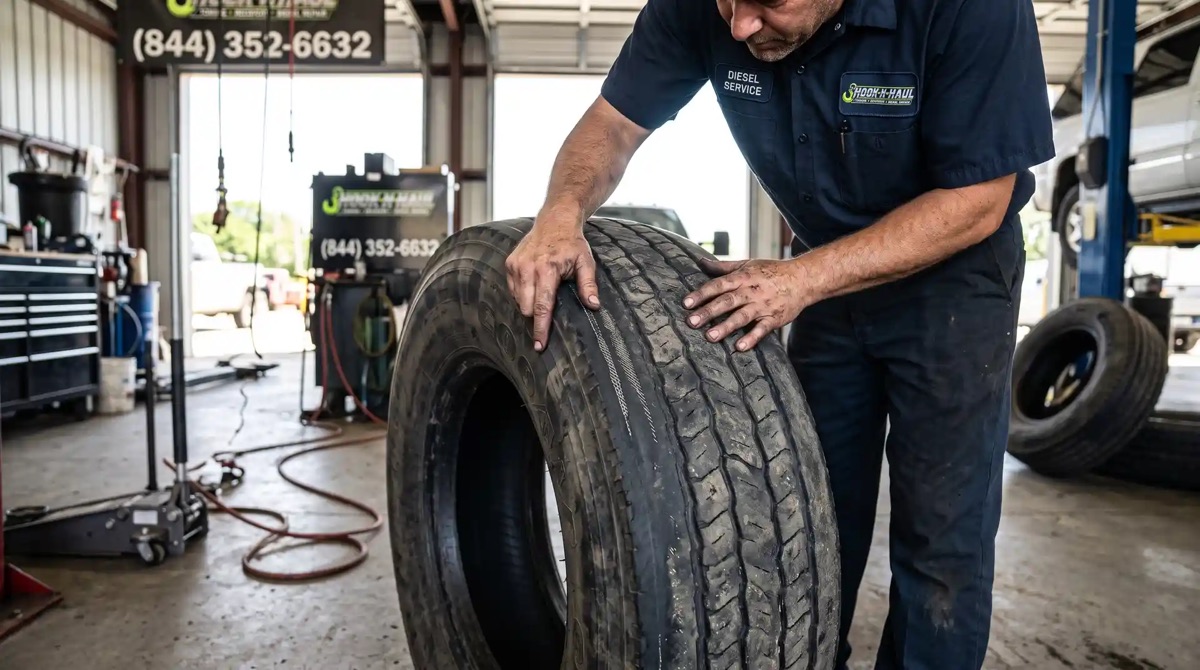
Tire Anatomy & The Non-Repairable Danger Zone
To understand repair limits, you must understand tire construction. Tires feature steel belts, casing plies, and specific flex zones.
| Tire Zone | Location Description | Repair Status | Reason / Risk |
|---|---|---|---|
| Crown Area | Central tread zone (at least 1/2 inch from edges) | Repairable | Supported by flat steel belts |
| Shoulder Zone | Curved outer edges connecting tread to wall | Never Repairable | High heat build-up and heavy cornering stress |
| Sidewall | Vertical smooth rubber surface | Never Repairable | Continuous flexing causes patch adhesive separation |
| Bead Area | Rubber ring seating against the metal rim | Never Repairable | Structural foundation holds internal air seal |
The shoulder and sidewall endure extreme mechanical deflection as your wheel rotates under cargo loads. Consequently, vulcanized rubber patches cannot bond reliably to surfaces that bend constantly.
6 Fatal Scenarios: When You Must Replace Instead of Repair
Commercial drivers must spot structural damage before heading onto high-speed highways like I-80 or I-77. If your tire displays any of these six conditions, you must replace it immediately:
1. Puncture Exceeds Maximum Size Thresholds
Small punctures from roofing nails are easily repairable in the center crown. However, road debris like rebar, large bolts, or jagged steel slices leave holes larger than 3/8 inch. Large holes sever internal structural cables, destroying casing strength.
2. Sidewall Bulges, Bubbles, or Scuffs
A rubber bulge indicates torn internal casing plies. As a result, pressurized air pushes outward against thin exterior rubber, creating a ticking blowout hazard.
3. Run-Flat Internal Liner Scorching
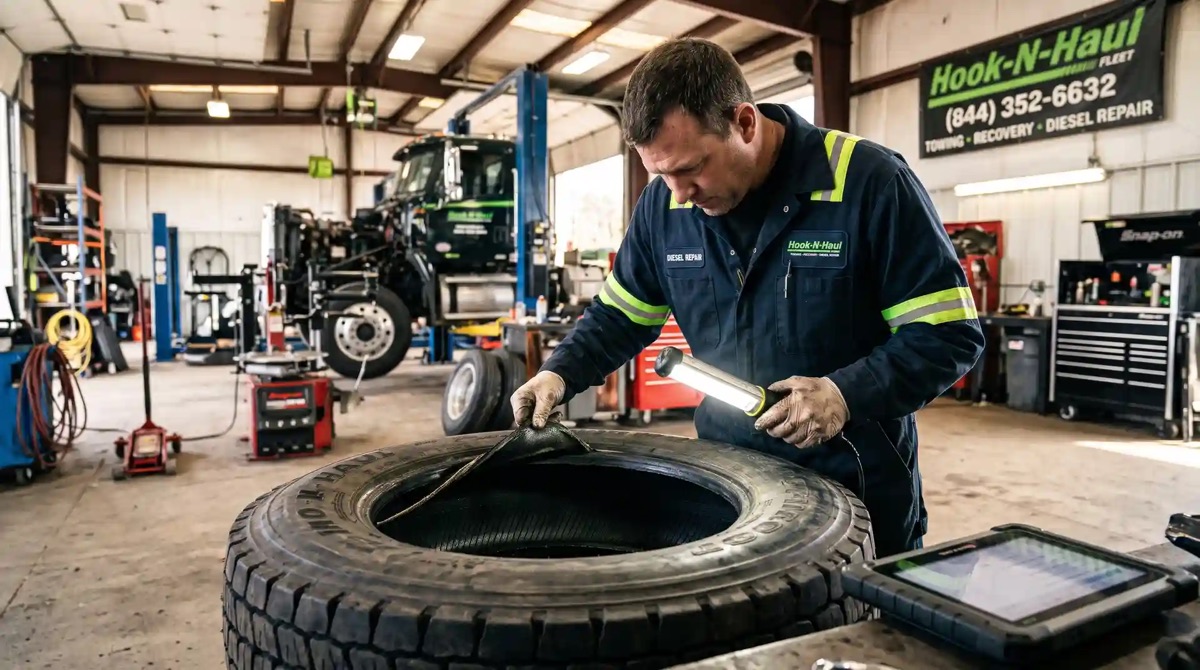
Driving even a quarter mile on a completely flat tire generates immense friction. Technicians dismount the rubber casing to inspect the synthetic rubber inner liner. If they discover black rubber dust or wrinkled inner walls, internal heat destruction has compromised the casing.
4. Overlapping or Crowded Past Repairs
Repairs must never overlap. Therefore, industry standards require at least 16 inches of distance between separate repair locations. Attempting multiple patches in one section creates weak structural points.
5. Insufficient Tread Depth
Federal safety regulations mandate minimum tread depths for commercial steering and drive axles. If your tread measures below 2/32 of an inch (or 4/32 on steer tires), repairing a puncture violates highway safety laws.
6. Bead Damage or Corrosion Cracking
Damaged bead bundles cannot seal airtight against the wheel lip. Furthermore, old tires with severe ozone cracking cannot hold patch vulcanizing cement safely.
Pro Tip: Never let a technician install an on-the-wheel rope plug without dismounting the tire from the wheel. An exterior plug seals the leak temporarily, but fails to seal the inner liner against moisture and internal casing rust.
Industry Safety Regulations: DOT & USTMA Standards
The Department of Transportation enforces rigid rules regarding commercial wheel assemblies. According to official guidelines published by the Federal Motor Carrier Safety Administration, operating a commercial motor vehicle with an unsafe, cord-exposed, or improperly patched tire triggers immediate out-of-service violations.
USTMA guidelines require a two-piece repair or a one-piece stem-and-patch combination unit. The rubber stem fills the physical injury channel, while the chemical patch seals the airtight inner barrier. Missing either component permits water to seep into the internal steel belts, creating invisible belt separation over time.
Cost Comparison: Safe Patching vs. Emergency Roadside Replacement
Fleet managers must balance tire replacement expenses against the catastrophic liability of a highway blowout.
| Tire Service Choice | Typical Cost (USD) | Service Duration | Longevity & Safety Factor |
|---|---|---|---|
| Combination Patch & Plug | $45 – $95 | 30 to 45 minutes | Permanent fix; matches tire life |
| Emergency Roadside Replacement | $380 – $750+ | 45 to 60 minutes | Brand-new casing; zero liability |
| Highway Blowout Aftermath | $2,500 – $10,000+ | Days to weeks | Destroys mudflaps, air lines, rims |
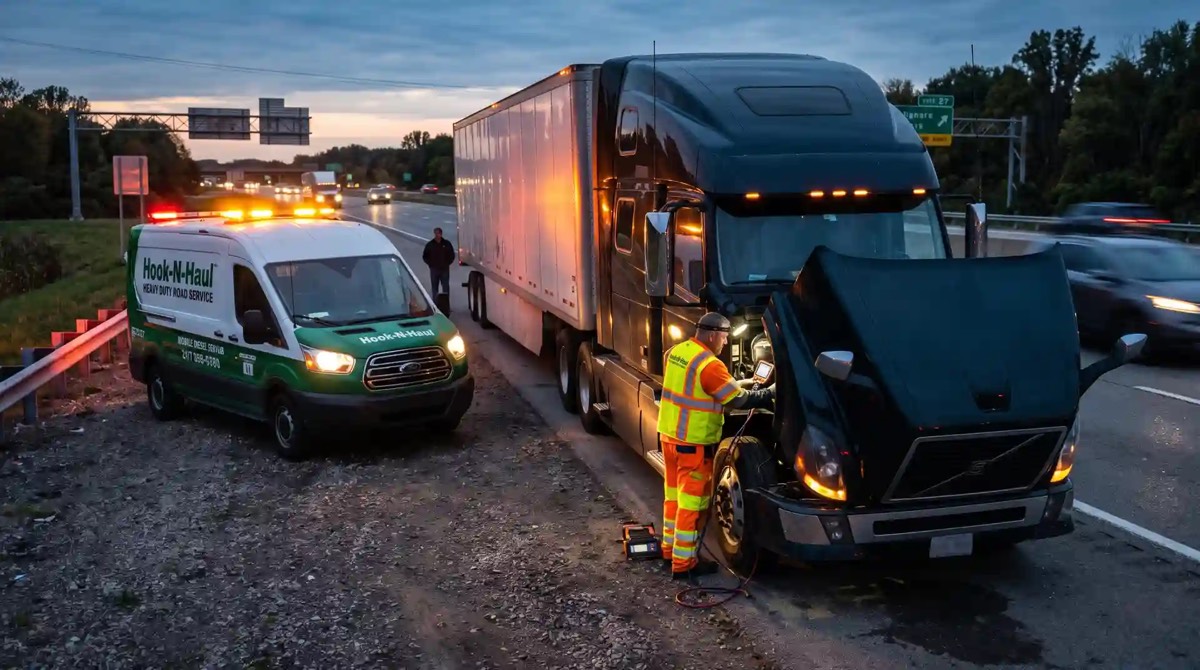
Investing in a new casing always costs less than repairing structural body damage after a highway blowout. When facing unexpected roadside flats, calling a professional road service truck repair team keeps your drivers safe.
Common Pitfalls to Avoid With Punctured Tires
Drivers often make preventable errors while attempting to save damaged rubber casings:
- Using DIY Rope Plugs as Permanent Fixes: Exterior rope plugs serve only as emergency limp-home measures. Leaving them installed causes slow moisture leaks that rot steel belts.
- Adding Liquid Tire Sealants to Heavy Casings: Chemical tire sealants coat wheel rims with caustic sludge and gum up tire pressure monitoring sensors.
- Ignoring the Shoulder Borderline: Attempting to patch injuries within an inch of the outer shoulder edge frequently results in sudden highway tire delamination.
- Skipping Wheel Balancing After Repair: Adding a vulcanized patch alters tire balance. Always spin-balance the assembly before returning it to road service.
Pro Tip: Always mark suspected tire leaks with grease chalk before spraying soapy water. This quick marking helps roadside mechanics identify multiple pinhole leaks instantly.
Commercial Tire Roadside Assistance in Northeast Ohio
Driving across Cleveland, Akron, and Youngstown exposes commercial tires to severe potholes and jagged metal debris. When winter temperatures drop, cold rubber becomes brittle, increasing the likelihood of curb cuts and rim leaks.
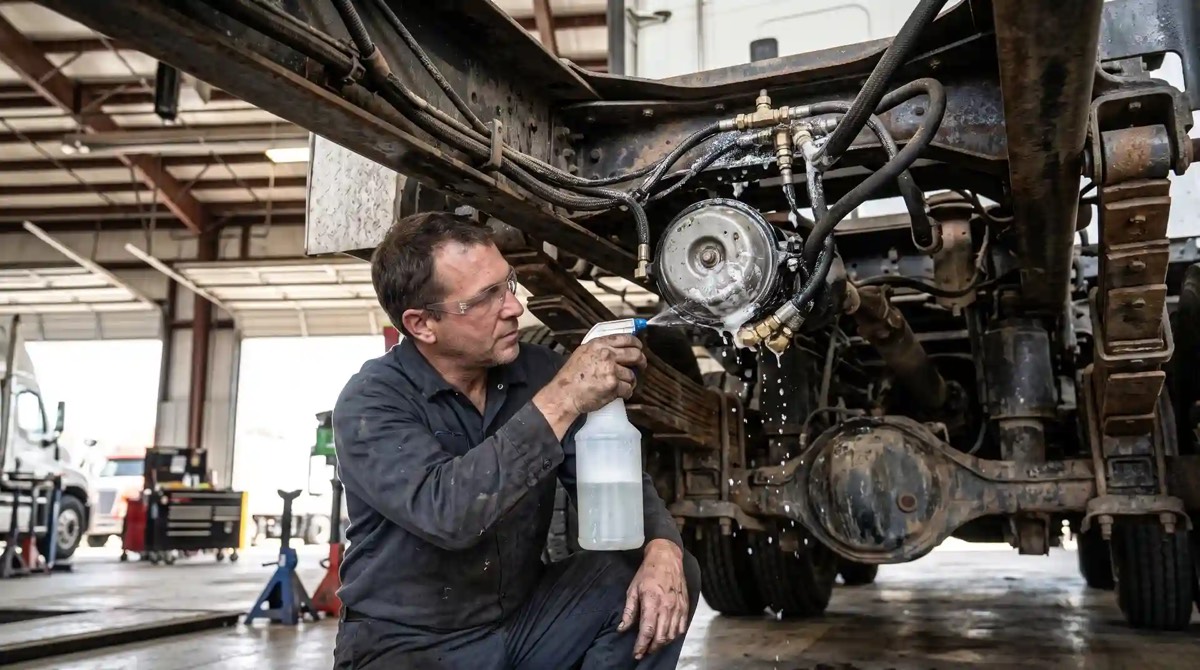
Whenever you need commercial wheel service, our technicians arrive equipped with commercial changers, inflation cages, and genuine replacement casings. In addition to tire replacements, our field teams handle complex mechanical emergencies such as axle spindle repair to keep your commercial fleet operational.
Frequently Asked Questions
Can a nail hole in the tire shoulder be plugged?
No, tire manufacturers strictly forbid patching or plugging tire shoulders. The shoulder experiences constant directional flex and heavy heat accumulation, which causes tire patches to separate quickly.
How big of a hole can you patch in a truck tire?
You can safely patch punctures up to 3/8 of an inch in diameter on commercial truck tires. Any larger hole damages internal steel cords beyond safe structural limits.
Why do shops refuse to patch run-flat tires?
Shops refuse to patch run-flat tires because driving without air pressure cooks the internal reinforcement rubber. Because mechanics cannot always see hidden internal heat fractures, replacing the tire is the only safe option.
How close together can two tire patches be?
Two tire patches must sit at least 16 inches apart along the circumference of the tire. If two punctures occur closer than 16 inches, you must replace the casing.
Protect Your Fleet With Fast Roadside Support
Understanding when a tire can not be patched prevents costly highway disasters and keeps your commercial drivers compliant with safety laws. Rather than risking a catastrophic tire blowout on the highway, inspect every casing thoroughly and replace damaged tires immediately.
If your rig suffers tire damage or mechanical breakdowns in Northeast Ohio, contact Hook-N-Haul for certified 24/7 mobile truck mechanic service. Our mobile service trucks will reach your location quickly, inspect the damage honestly, and get your cargo rolling again safely.