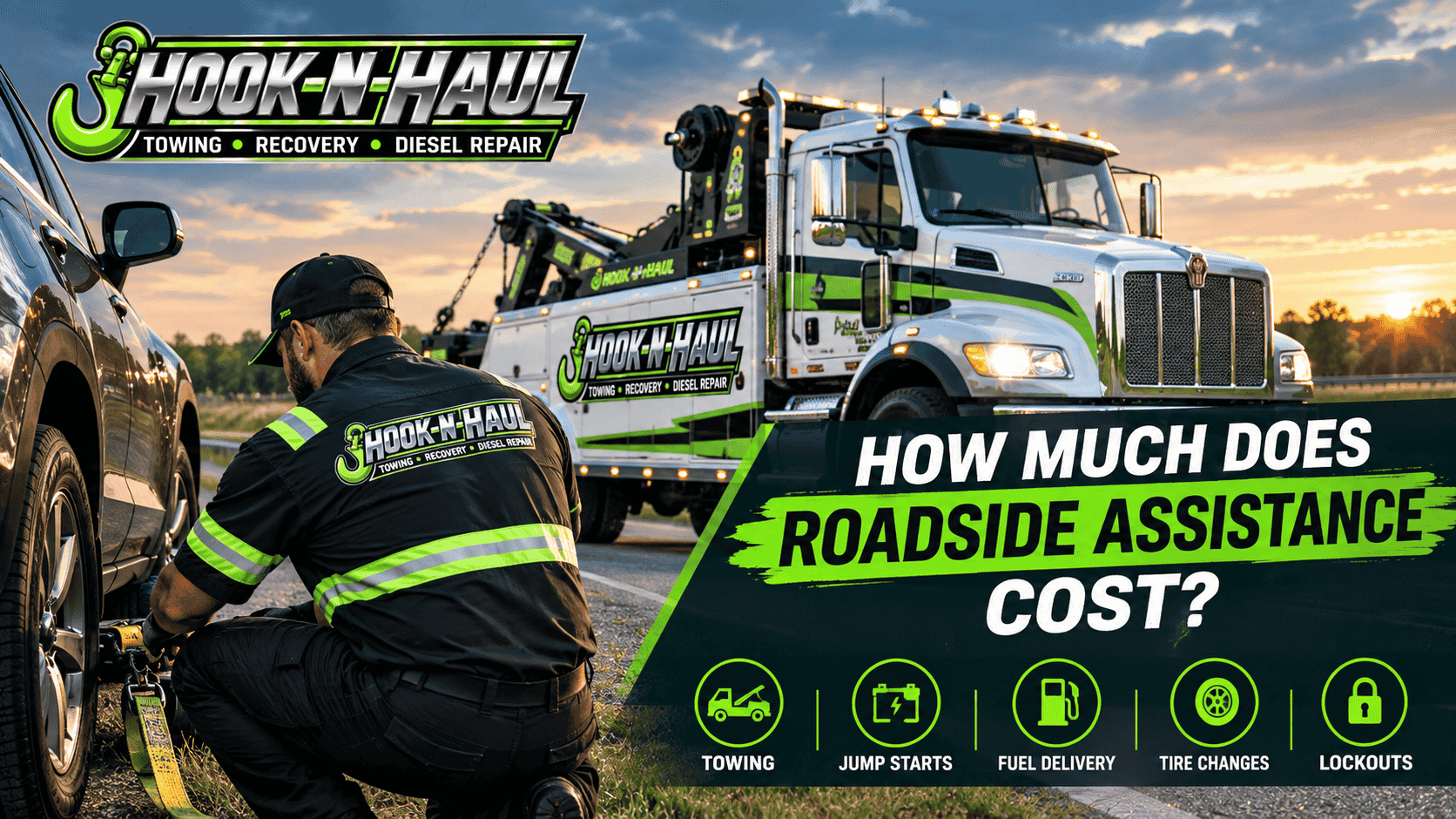
It’s 6:40 a.m. The temperature is 9°F, your car won’t start, and you’re late for work. Or you’re on I-71 with a flat tire and a line of semis blowing past your window.
At that moment, you don’t care about price. You just want help.
But a few minutes later, a second worry hits: how much is this going to cost me?
If you’ve ever asked that, you’re not alone. Prices for roadside help can be confusing. Some drivers pay about $60 a year and rarely think about it. Others pay $150 or more for one bad night. This guide breaks down every option in plain language so you can decide before you’re stranded.
Quick Answer: How Much Does Roadside Assistance Cost?
Roadside assistance usually costs $60 to $170 per year for a membership plan, or about $75 to $250 per call if you pay as you go. Your final price depends on the plan, how far you need to be towed, the type of vehicle, and the time of day.
| Option | Typical Cost | Best For |
| Auto club membership | About $60–$170 per year | Drivers who want full coverage and longer tows |
| Insurance add-on | About $6–$36 per year | Budget drivers with short-tow needs |
| Pay-per-use | About $75–$250 per call | Rare breakdowns |
| Credit card or car maker perks | Often included | Newer cars and some cardholders |
Prices vary by company, region, and vehicle. Always confirm current rates before you buy.
What Is a Roadside Assistance Service?
A roadside assistance service sends a trained driver to you when your vehicle can’t safely keep going. Most services cover the same basic problems:
- Towing to a repair shop or your home
- Jump-starts for dead batteries
- Flat tire changes using your spare
- Lockout help if your keys are inside
- Fuel delivery if you run out of gas
- Winching if you’re stuck in a ditch, mud, or snow
Some plans also cover trip interruption costs like a hotel or a rental car. Others cover only the basics.
The difference between plans usually comes down to two things: how many miles of towing you get and how many calls you can make each year.
The Real Cost of Roadside Assistance, Option by Option
1. Auto Club Memberships
This is the most well-known choice. AAA memberships can cost between $38 and $170 per year, depending on your ZIP code and coverage level, and towing distance ranges from 5 to 200 miles depending on your plan.
Most clubs offer three levels:
- Basic (Classic): Around $56 a year with about 5 miles of towing. That’s often just enough to reach the nearest shop.
- Middle (Plus): Roughly $100 a year with about 100 miles of towing. This is the best fit for many drivers.
- Top (Premier): About $164 a year with 200-mile towing, plus a free day of rental car.
Prices differ by region because these clubs are run locally. Ohio pricing may be different from what you’d see in another state, so check with your local club.
Watch out for: the towing limit. A 5-mile tow sounds fine until your breakdown happens 30 miles from home.
2. Insurance Roadside Add-Ons
Many car insurance companies offer roadside help for a small fee. These add-ons can cost as little as $6 to $36 a year. That’s cheap.
The catch is that these plans often limit towing to about 15 to 25 miles, and using them may count as a claim on your record. Before you rely on one, ask your agent two questions: “How many miles of towing do I get?” and “Will a roadside call affect my rate?”
3. Credit Card and Car Maker Perks
Some credit cards and many new vehicles include free roadside help for a limited time. Check your card benefits and your owner’s manual. These perks can be handy, but the rules vary. Some cards only help if you paid for your gas or a rental with that card, and some only cover a set dollar amount.
4. Pay-Per-Use (No Membership)
You can also skip the plan and call a towing company when trouble strikes. Pay-per-use roadside service costs about $75 to $250 per incident.
Here is what individual services often cost when you pay out of pocket. These are typical ranges, and your price may differ:
- Local tow: A hook-up fee plus a per-mile charge. Many drivers pay $75 to $150 for a short tow, and more for longer distances.
- Jump-start: About $50 to $100
- Flat tire change: About $50 to $100
- Lockout: About $50 to $100
- Fuel delivery: About $50 to $100, plus the cost of the fuel
- Winch-out: Often $100 to $300 or more, depending on how stuck you are
Pay-per-use works if you break down once every few years. If it happens more often, a membership usually costs less.
Roadside Assistance Cost in Ohio
Ohio drivers face some special challenges, and they can change what you pay.
Winter is the big one. Lake-effect snow around Cleveland, icy back roads in Lorain and Medina counties, and long cold snaps all drain batteries and put cars in ditches. In cold weather, batteries cause a big share of breakdowns. Battery failures account for roughly 32% of all AAA service calls, and that number climbs even higher from December through February.
Distance matters. Ohio has busy corridors like I-71, I-77, I-80/90, I-76, and I-70. If you break down between cities, a 5-mile towing limit won’t get you far. A longer-tow plan can be worth the extra money here.
Time of day matters too. Night, weekend, and holiday calls can cost more when you pay per call. Bad weather can also push prices up because demand goes way up.
Ohio rules: Ohio has rules for certain kinds of tows, such as tows ordered by police or from private property. The Public Utilities Commission of Ohio (PUCO) is the agency drivers are often pointed to with questions. Rules can change, so check with them for current details.
A simple way to think about roadside assistance cost in Ohio: most drivers spend $60 to $170 a year on a membership, or $75 to $250 when they pay per call. Winter, distance, and vehicle size are what push you toward the higher end.
Why Does Roadside Assistance Cost What It Does? (The Causes)
If two calls cost very different amounts, one of these factors is usually the reason:
- Distance. More miles means more fuel, more time, and more wear on the truck.
- Vehicle size and weight. A small sedan is easy to tow. An SUV, a work truck, an RV, or a semi needs bigger, more expensive equipment.
- Type of tow truck. A flatbed costs more than a hook-and-chain tow, but it protects all-wheel-drive and low-clearance vehicles.
- Where you are stuck. A car sitting in a parking lot is a simple job. A car sunk in a muddy ditch or on its side needs recovery equipment.
- Time and weather. Storms, snow, holidays, and late nights all raise demand and cost.
- Response speed. Faster help usually costs more when everyone is calling at once.
How to Lower Your Roadside Assistance Cost (The Fixes)
Good news: you have real control over what you pay.
- Check what you already have. Look at your insurance, your credit cards, and your car’s warranty first. You may already be covered.
- Match the plan to your driving. Do a lot of highway miles? Pick a plan with longer towing. Mostly drive across town? A basic plan may be enough.
- Compare towing limits, not just prices. A $60 plan with 5 miles of towing can cost you more than a $100 plan with 100 miles if you break down far from home.
- Ask about all vehicles. Some plans cover the member in any car. Others cover only one car. Some exclude RVs, trailers, or heavy trucks.
- Keep your car healthy. Test your battery before winter and check tire pressure every month. Carry a spare that’s actually inflated.
- Get a quote before you agree. If you call for pay-per-use help, ask for the total price, including hook-up fees and mileage. Reputable companies will tell you upfront.
The Risks of Having No Plan (Or the Wrong Plan)
Skipping coverage can feel like saving money. But it carries risks that are easy to overlook.
Surprise bills. Without a set price, you may accept whatever number you hear, especially when you’re cold, tired, or worried about safety.
Long waits. Some plans send help through a large network, and wait times can be long during storms. If you’re on a busy highway, every minute matters.
Unsafe situations. Standing on the shoulder of a freeway is dangerous. Waiting a long time in extreme cold or heat is risky, too.
Scams. Some drivers get taken advantage of by “tow chasers,” people who show up uninvited after a breakdown or accident and quote high prices. Never accept help from a truck you didn’t call unless you’ve confirmed the company and the price.
Gaps in coverage. A cheap plan may not cover a big tow, an RV, or a truck. You don’t want to find that out on the side of the road.
Which Option Is Right for You? (The Solutions)
Use this quick guide:
- You drive an older car every day: A mid-level membership is usually worth it.
- You drive a newer car with a warranty: Check your included roadside coverage first. You may not need to pay extra.
- You barely drive: Pay-per-use may cost less, but keep a trusted towing number saved in your phone.
- You take long road trips or commute far: Look for a plan with longer towing distances.
- You drive a truck, RV, bus, or work vehicle: Standard car plans may not cover you. You’ll want a company that handles larger vehicles.
What to Do When Your Vehicle Breaks Down in Ohio
Save this list to your phone:
- Get safe first. Turn on your hazard lights and move as far off the road as you can.
- Stay in the vehicle if you’re on a busy highway. Keep your seat belt on unless you must leave for safety.
- Call 911 if there is any danger. That includes an accident, injury, or if you’re stopped in a live lane.
- Call your roadside provider or a trusted local towing company. Give your exact location, using mile markers, exit numbers, or a map pin.
- Ask for the price and the arrival time. Write down the company’s name and the truck’s description.
- Verify the truck when it arrives. Make sure the name matches the company you called.
- Take photos of your vehicle before it’s hooked up, especially after an accident.
When You Need More Than a Jump-Start
Some breakdowns can’t be fixed with a jump or a spare. A stuck vehicle, a heavy load, or a disabled truck needs a team with the right equipment.
That’s where Hook-N-Haul Recovery Repair Towing & Transport comes in. Based in Litchfield, Ohio, the company offers 24/7 roadside assistance, towing, and recovery across Northeast Ohio. Its equipment range runs from light-duty wreckers to heavy rotators with 50-ton capacity, so there’s a truck for the job, whether it’s a stuck vehicle or a semi that’s gone off the road.
Here’s where local coverage helps:
- Stranded near Cleveland? See heavy truck towing and repair in Cleveland, OH.
- Broken down at the I-77/I-271 junction? Learn about heavy truck towing in Richfield, OH.
- Along the Lake Erie side of Lorain County? Check towing and repair in Amherst, OH.
- Running a fleet? Read our guide to 24/7 heavy-duty towing in Northeast Ohio to see how fast response cuts downtime.
Our team isn’t just a tow. Hook-N-Haul has over 50 vehicles, two repair facilities, and certified professionals, so your vehicle can go from the roadside to the repair bay without you calling a second company.
Want more driving and towing tips? Browse the Hook-N-Haul blog for guides written to keep you and your vehicle moving.
Frequently Asked Questions
How much does roadside assistance cost per year?
Most memberships cost about $60 to $170 a year. Basic plans sit at the low end with short towing distances. Premium plans cost more but tow much farther and often include extras like rental car help.
How much does roadside assistance cost without a membership?
You’ll usually pay about $75 to $250 per call. The price depends on the service (a jump-start costs less than a tow), how far you go, your vehicle type, and the time of day.
What is the average cost of a tow?
A short local tow for a passenger car often runs about $75 to $150. Longer distances, larger vehicles, and recoveries cost more. Always ask for the full price before the truck hooks up.
Is roadside assistance worth it?
For most drivers, yes. A single tow can cost as much as a year of membership, so one call can pay for itself. It’s most worthwhile if you drive an older car, commute long distances, or travel in winter weather.
Does car insurance cover roadside assistance?
Only if you add it. Many insurers offer a low-cost roadside add-on, but towing limits can be short. Ask your agent about mileage caps and whether a call counts as a claim.
What is not covered by roadside assistance?
Common exclusions include the cost of parts, fuel, and repairs, tows over your plan’s mileage limit, and certain vehicles such as large trucks or RVs. Read your plan details carefully.
Does roadside assistance cost more at night or on holidays?
With pay-per-use, it often does. Membership plans usually don’t charge extra for time of day, but wait times can be longer when demand is high.
How much does roadside assistance cost in Ohio?
Ohio prices are close to the national range: about $60 to $170 a year for memberships or $75 to $250 per call. Winter weather and long highway distances can push costs higher, so a plan with longer towing may be worth it.
How long does roadside assistance take to arrive?
It depends on your location, the weather, and how busy the company is. Many calls take 30 to 90 minutes, but storms can stretch that. Ask for an estimated arrival time when you call.
Can I get roadside help for a truck, RV, or bus?
Yes, but not every plan covers them. Look for a company that specifically handles larger vehicles and has the right equipment.
Don’t Wait for a Breakdown to Find Help
The best time to figure out your roadside assistance cost is before you need it. Knowing your options, your limits, and who you’ll call takes the panic out of a bad day.
If you’re stuck right now, or you want a trusted number saved in your phone for later, call Hook-N-Haul Recovery Repair Towing & Transport at (844) 352-6632. We’re open 24 hours a day, every day, with towing, recovery, and repair for Ohio drivers.
📞 Call (844) 352-6632 for fast towing and roadside help across Northeast Ohio.
Prices in this article are general estimates and change by company, location, and vehicle. Confirm current rates with any provider before you buy.